Mark Roberts on Christopher Barnett – Poetry and Collaboration

22 Sep
Luciano Prisco ‘Buio’, 2016, oil on canvas

Luciano Prisco ‘Buio’, 2016, oil on canvas

I was recently asked to write an introduction on the work of Christopher Barnett for an exhibition of paintings by Luciano Prisco and poems by Christopher Barnett which is currently showing at the Langford 120 Gallery (120 Langford Street North Melbourne Victoria 3051) until 9 October 2016.  Christopher has been one of the great influences on my work and my understanding of poetry and literature and I hope that this is reflected in this introduction – if nothing else this project has also introduced me to the wonderful paintings by Luciano Prisco.

The test to my introduction can be found on Rochford Street Review: https://rochfordstreetreview.com/2016/09/12/luciano-prisco-new-works-poems-from-christopher-barnett-mark-roberts-on-christopher-barnett-poetry-and-collaboration/


.


‘City Circle’ hits the (big?) screen!

15 Sep

beams-fest

I have been waiting over twenty years for the call from Hollywood. I knew it would come, it was just a question of when. You know the call: “Hi Mark, We’ve read your micro-fiction and we want to make it into a movie. Yes a three hour blockbuster with Tilda Swinton, Charlotte Rampling and Harvey Keitel”. Well I’m still waiting for that call but I did receive an email from the wonderful Spineless Wonders to let me know that my small micro-fiction piece ‘City Circles’ was being made into a very short video by Emily Twomey and will be screened as part of the Beams Arts Festival at Chippendale this Saturday. The piece will be part of Spineless Wonders #storybombing initiative. #storybombing takes place at 15A Dick St, Chippendale NSW and I believe that the videos will also appear on the festival show reel.

If you are in Sydney come along and have a look.


‘perfume’ wins 2016 Dangerously Poetic Byron Writers Festival Poetry Prize

14 Aug
With Anthony Lawrence (left) at the Dangerously Poetic Byron Writers Festival Poetry Prize presentation. Photograph Linda Adair

With Anthony Lawrence (left) at the Dangerously Poetic Byron Writers Festival Poetry Prize presentation. Photograph Linda Adair

Last weekend I had the wonderful experience of attending the three day Byron Bay Writers Festival and, on Saturday night, being awarded the 2016 Dangerously Poetic Byron Writers Festival Poetry Prize for my poem ‘perfume’. In his judge’s report for the prize Anthony Lawrence described ‘perfume’ as:

‘perfume’ moves like frames in a sepia-tone, grainy film. Its story suggests intrigue, death, rural myth or local history, in a time of war.

First and third person points of view combine in clipped, lyrical stanzas to create a miniature novel in which mystery and allusiveness are palpable.


Details of the award, together with the winning poems can be found here http://dangerouslypoetic.com/2016/08/and-the-winners-are-2/ or you can find ‘perfume’ below.


perfume
………………………………………………….she heard him
………………………………………………….an instant before
………………………………………………….the scarf pulled tight
………………………………………………….against her throat
the train to lithgow
settles into a metal song
reassurance of steel on steel
………………………………………………….her arm swung around smashing
………………………………………………….the perfume bottle to the floor
last night I smelt a ghost
sweet & alluring
flowers, orange
a suggestion of earthiness
………………………………………………….wartime
………………………………………………….he will be shipped out
………………………………………………….before
………………………………………………….they find the body
a ripple of iciness
flowing up the bed
my eyes closed
but awake
colder now
than a bathurst winter
………………………………………………….left behind in the pub
………………………………………………….next to the station
………………………………………………….waiting

.

.

.

‘The Age of Rubbish’ – New Poem in Bluepepper

13 Aug

bluepepper

.
Bluepepper,
edited by Justin Lowe, is one of my favourite online poetry journals so it is always exciting to have a poem accepted by them. ‘The Age of Rubbish’ is a poem about the recent history of Morrison Bay on the Parramatta River near where I grew up.

http://bluepepper.blogspot.com.au/2016/07/new-poetry-by-mark-roberts.html

.

.

.


‘Red’ and ‘Reading Poetry’ published in ‘In-Flight’ Literary Journal

3 Apr

mark Dan1

Two more poems from Concrete Flamingos, ‘Red’ and ‘Reading Poetry’, have just been published in the US based literary magazine In-Flight.

http://inflightlitmag.com/issues/issue7/author.html?author=Mark%20Roberts&work1=reading%20poetry&work2=red

Concrete Flamingo is available from https://printedshadows.wordpress.com/2016/01/23/concrete-flamingos-poems-by-mark-roberts/

‘how many more are coming’: Cordite 53 THE END edited by Pam Brown

1 Feb

Jack_Marsh_cup_large

To conclude an extremely busy day for poetry my poem ‘how many more are coming’ was published today in Cordite 53, edited by Pam Brown.

‘how many more are coming’, like some of the slide poems which will appear on Project 365+1 over the coming month, is part of a larger work/book called LACUNA. The poem records the death of Jack Marsh, an Aboriginal cricketer, who was bashed and left for dead in Robinson Park in the Centre of Orange NSW.

The poem can be found here: http://cordite.org.au/poetry/theend/how-many-more-are-coming/

The complete issue, which includes some amazing work, can be located here: http://cordite.org.au/content/poetry/theend/

My thanks to Pam Brown and Cordite Editor Kent MacCarter.


——————————————————————————————-

Project 365+1: A poem a day for a month – #1 Slides – Prelude

1 Feb

slides

.
February appears to be the busiest month. Just lucky this year is a leap year and February has one extra day to help fit everything in. For the next 29 days you will have the pleasure of reading a new poem from me everyday on the 365 +1 Project website http://project365plus.blogspot.com.au/

So what is Project 365+1? It is described on the website describes as:

Project 366 is a poem-centric collaboration of artists and writers taking place daily throughout 2016. And why? Because poetry is a process, art is a process. Poetry and art happen because we do it, because we make the effort to make it. So the object of this project is not to create finished art objects on a daily basis; it’s to get work on the way every day. Project 366 is to encourage the everyday business of artmaking for those who work – however they work – with word and image. Some people will post only pictures, some people will post only poems or short prose pieces. Some people will alternate among the various forms of their practice. And some may evolve new practices over the course of the year. (http://project365plus.blogspot.com.au/p/about-this-project.html)

I have approached my month with a box of old slides from my childhood – the kind you put in a projector and watched image after image appear on a wall or screen. Almost lost technology now, but the physical slides, like a floppy desk, remind us of something almost forgotten. So each day I will take a slide, either the physical slide itself or the memory of the projected image, and write about it.

Some of the poems may form part of a project I am working on with the working title of LACUNA (an empty space or a missing part; a gap. Inprinting, lithography & bookbinding) a gap or space, esp in a book or manuscript) – this is longish piece about place, history and memory set around the Central Western NSW town of Orange). Other poems may exist for a day and be placed back in a mouldy box, other poems maybe stand alone works.

My first poem has been posted today. Have a look and feel free to take part in a conversation about the poem, the process or the project….

http://project365plus.blogspot.com.au/2016/02/mark-roberts-1-slides-prelude.html

Project 365+1 is also on Face Book https://www.facebook.com/Project-Three-Six-Six-1542051856107487/

———————————————————————————————————————-

My forthcoming poetry collection, Concrete Flamingos, with will be launched in Sydney by Anna Couani on Saturday 27 February from 2.30 pm at the Friend in Hand Hotel 58 Cowper St Glebe. Further details and purchase details at https://printedshadows.wordpress.com/2016/01/23/concrete-flamingos-poems-by-mark-roberts/

‘Byron Bay’ published in Plumwood Mountain Volume 3 Number 1

1 Feb
byron bay whaling station

Byron Bay Whaling station operated from 1954 to 1962. (Photograph ABC)

While it is always exciting to have a poem accepted for publication there was something very satisfying about having my poem ‘Byron Bay’ accepted for Volume 3 Number 1 of Plumwood Mountain. 

Ever since I started writing poetry as a teenager one of the driving forces behind my writing has been a political awareness and a deep concern for the environment and ecology – indeed my first real political involvement was with the Friends of the Earth campaign against uranium mining in the late 1970’s and the anti-yellowcake export pickets at the Glebe Island terminal.

Plumwood Mountain describes itself as a journal of ecopoetry and ecopoetics which it then goes onto to say is broadly a “poetry that may broadly be understood as engaging with a more-than-human context, in a variety of poetic forms, articles on the poetics and intent of ecopoetry, exploring ways in which poetry not only responds to and affects its world, but also ways in which poetic practice can model ecological systems and concerns, the ways in which poems themselves are material, breathy things in a world of animate matter, and reviews of collections of poetry that understand themselves or could be understood as ecopoetry”.

Given this I am particularly happy that Plumwood Mountain has published my poem about the old whaling station at Byron Bay in its latest issue. You can read ‘Byron Bay’, along with many other amazing poems by an extraordinary group of poets at:

http://plumwoodmountain.com/plumwood-mountain-volume-3-number-1/

‘Byron Bay’ also appears in my forthcoming collection, Concrete Flamingos, with will be launched in Sydney by Anna Couani on Saturday 27 February from 2.30 pm at the Friend in Hand Hotel 58 Cowper St Glebe. Further details and purchase details at https://printedshadows.wordpress.com/2016/01/23/concrete-flamingos-poems-by-mark-roberts/

Concrete Flamingos – Poems by Mark Roberts

23 Jan

 concrete flamingos

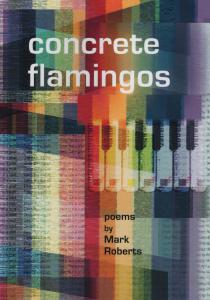
Concrete Flamingos, the first book by Mark Roberts since 1985, will be launched by Anna Couani on Saturday 27 February from 2.30pm  at the Friend in Hand Hotel 58 Cowper St Glebe.

Lauren Williams’ Clean Skin Poems and David Gilbey’s Pachinko Sunset will also be launched on the same afternoon)

If you can’t make it to the launch you can order a copy now:

Credit Card/Paypal $20

buy

$20 Cheque/Money Order

Mail to Mark Roberts, PO Box 5399 Chatswood West NSW 1515
(make Cheques payable to Mark Roberts)

or

Island Press and sent to 29 Park Rd, Woodford NSW 2778 Australia.
(make Cheques payable to Island Press)

Mark Roberts was born in Sydney and has been active in the writing community since the early 1980s. He has been widely published in journals, magazines and anthologies both in Australian and overseas. He co-founded the occasional literary journal P76 in 1982 and set up Rochford Street Press in the same year. In 2011 Mark founded he online cultural review journal Rochford Street Review and he is currently poetry editor for Social Alternatives journal. Concrete Flamingos is his first major collection of poetry.
“Concrete Flamingos is a long-awaited collection of work from a writer who has been a prominent behind-the-scenes presence in the Sydney literary scene for decades. The work has an uncanny familiarity but traverses a wide conceptual and literary territory. Very Sydney, self-consciously writerly and drily witty. The collection includes moving memory pieces from a Sydney childhood alongside conceptual pieces that reference other writers. Whilst embracing international influences like The New York School, Mark Roberts’ work is distinctly authentic and effortlessly political”.
………………………………………………………………..– Anna Couani
“In these ironic contemplative poems, Roberts has examined our literature and assumptions with precision, depth  and delicacy…”
………………………………………………………………– Rae Desmond Jones
“What is our time, our current moment about? Has the near future arrived? Mark Roberts is a poet I would read for a (non)answer. What cannot be said is said. Here is a voice that slips between the ribs, where you want it to, to offer succour for the incommensurable, where no other balm is available but these poems.”
……………………………………………………………..– Moya Costello


http://islandpress.tripod.com/ISLAND.htm

‘In the Class Struggle, Better Red than Wed ‘Widdershins’ by Jack Bealey

8 Apr

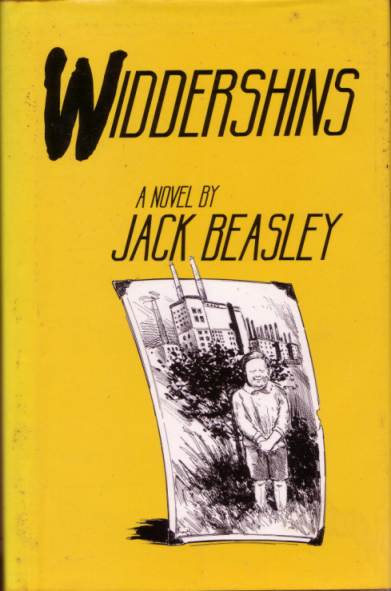
Widdershins by Jack Beasley Wedgetail Press 1986. First appeared in the Times on Sunday (formerly The National Times) in 1986.

widdershinsJack Beasley certainly is no stranger to Australian radical fiction, having spent a lifetime involved in radical politics and in writing about its literature. Indeed his major works to date, Red Letter Days and the The Rage for Lifea study of Katherine Susannah Prichard, have attracted consider attention. The publication of Widdershins, his first major fictional work, must therefore be seen as an event of some importance.

‘Widdershins’ means to swim against the tide and, predictably, one of the novel’s central themes is the struggle of the main character, Jeff Conway, to swim against the prevailing tide of Australian conservatism. Conway is, in many ways, typical of a generation  of Australian communists and radicals. Born to a working class family in the BHP steel city of Newcastle in the early 1920s, his education takes place against the backdrop of the Depression. Returning from the war to Sydney, he quickly becomes deeply involved in the struggles of his trade union and in the day-to-day affairs of the Communist Party.

Indeed Conway’s life strangely parallels the history of the Communist Party of Australia, something which he recognises:

The party and I are more or less of an age. We both breathed what was then the clear Australian air about the beginning of decade three….as the party and I attained maturity, our two paths coincided. I joined our revolution and I signed on for the duration.

These parallels are, at times, striking. During the period from the end of World War II to midway through the 1950s when the party was at its peak, Conway’s family life was happy and secure, But as serious splits and divisions opened up in the party after the 20th Congress of the Soviet party and the Soviet intervention in Hungary, his marriage begins to fall apart. By the mid 1970s party membership is at an all time low and Conway is in hospital recovering from a serious car accident, but also showing the first signs of asbestosis.

Although Widdershins clearly fails into an Australian tradition of radical realism, Beasley attempts at times to expand the genre. In the opening sections of the novel he employs several stylistic devices, such as discontinuous narrative and stream of consciousness. He also plays with notions of time throughout the novel – dates are left deliberately vague and one only gradually becomes aware of the time gap between specific events. Beasley, however, is obviously far more at home with realism and overall these devices tend to disrupt the novel’s continuity without really adding to its impact.

One of the great strengths of Widdershins is the portrayal of the relationship between Conway and his wife Ann. Ann, also a party member, sees in their marriage new possibilities for an equal relationship. SHe soon finds, however, that despite Jeff’s best intentions, their marriage has fallen into predictable patterns. She also realises that, despite its rhetoric, the party still works to marginalise women:

Even in the party itself, do you think there’ll ever be a woman as general secretary? Not while they’re always sidetracked into work among women as we call it!”

Ann’s anger grows as she realises that far greater importance is placed on the work Jeff does organising the men at the power station where he works, than among the “work among women’ or the mundane party work she undertakes in her own branch.

Although Jeff never admits it, a clear distinction grows up between his party work and his family life, and the two increasingly take on the appearance of opposites. Either he stays at home and looks after the children or he goes to an important meeting and feels that he is accomplishing something “real”. The party eventually disciplines him when he misses a vital branch meeting  because Ann is sick and he has to look after the children. The party obviously believes that Jeff has a political duty to be at the meeting. Ann finally leaves him, realising for the first time that she was, in fact, the “strong one” in the family”.

Ann’s political consciousness was perhaps 15 years too early. Her marriage took place well before the saying “the personal is political” became a catchcry for sections of the Left and before the resurgent feminism of the sixties nd seventies began to affect the Communist Party’s attitude and structures. One of the final ironies of Widdershins is that while Jeff leaves the party because of what he sees  as “the party’s collapse into the mire of revisionism”, Ann probably would have found the Communist Party of the seventies far more flexible than the “cohesive” party of the fifties.

While Beasley may lack, in the final instance, much of the sophistication of many younger writers, his novel is an honest portrait of the aspirations, achievements and shortcomings of a generation of Australian communists who lived through some of the century’s most tumultuous struggles. As such Widdershins is an important addition to the Australian radical literary tradition.

—————————————————————————————-

Jack Beasley’s review of Wintering by Victor Kelleher appeared in P76 Issue 6

.

.