The Pathetic Jogger David Foster ‘Hitting the Wall’ (1989)

10 Jan

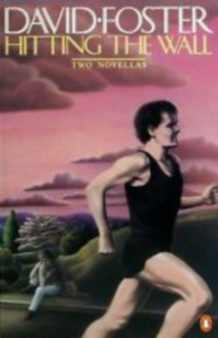
Hitting the Wall by David Foster Penguin 1989. This review was first published in Australian Book Review Issue 109 April 1989.

David FosterI have often found myself feeling a little frustrated after reading a David Foster novel. While never doubting his ability as a writer, the convolutions of his narrative have, more than once, overshadowed his undeniably fine prose. His latest book Hitting the Wall, a collection of two novellas, allows us the opportunity to examine how Foster handles the more urgent needs of this much shorter form.

Hitting the Wall also allows us to see two different stages of Foster’s development as a writer. The first novella, ‘Eye of the Bull’, was written in 1986, while the second, ‘The job’, is a much earlier work having been written in 1973 and having first ap­peared in Escape to Reality in 1977. Both these novellas share similar concerns. Wilson, the central charac­ter of ‘Eye of the Bull’, is obsessed with running. In fact he spends most of the novella running, both physi­cally and emotionally. Like a true addict he believes that he can keep his addiction under control, whereas his addiction gradually overtakes him, and this will cost him his job, his health and eventually his family.

Billy, the small time crim in ‘The Job’, is unable to break out of the lifestyle which has already landed him once in gaol. Unable to enter­tain the thought of a conventional job, he lives off his wits, content for the most part to drift from one situ­ation to the next, making little effort beyond his regular nights Of safe breaking. Billy, in fact, is addicted to ‘the job’, describing how, when he was on a job, his heart would beat ‘as though I had dosed up on methedrine, attuned to the spirit of the night’.

‘The Job’ opens as Billy is released from gaol. A few hundred metres from the gates he accepts a lift from Brian in a beaten up old car. Brian soon talks Billy into taking part in a series of robberies. But as time passes with nothing to show but an amateurish attempt on the local RSL, we realise that Billy is simply a plaything for Brian — that a game is being played out that has been played out many times before. Billy himself recognises this early on when he thinks:

You tell yourself you’re learning, you’re changing, but you’re not learning and you’re not changing very much, except that you feel increasingly tired.

‘The Job’ is, in fact, built on repet­ition. Billy is befriended by Brian and when Brian disappears Billy finds himself taking his place. He begins living with Brian’s wife in Brian’s house and begins sleeping with his mistress. In the end it is the same need that Brian felt to ‘escape’ which takes Billy back to the road leading past the gaol looking for a hitchhiker just out of gaol.

Stylistically Foster has kept a tight rein over this earlier of the two novellas in Hitting the Wall. The lan­guage, at times, seems a little forced and overall I felt that ‘The Job’ could indeed benefit from one final, thor­ough edit. ‘The Job’ is obviously a carefully planned work and one is always aware of Foster leading the narrative in a wide circle. Halfway through the novella it became clear that he is leading us back to the beginning. ‘Eye of the Bull’, by comparison, is much more stylistically relaxed, and this has a lot to do with the subject matter. Whereas Billy in ‘The Job’ returns to his starting point, Wilson runs virtually in a straight line from beginning to end. It may also have something to do with Foster ‘s matu­rity as a writer. The thirteen years which separate ‘The job’ from -Tye of the Bull’ have been prolific for Foster and one can perhaps argue that the smoothness of `Eye of the Bull’ is, in part, a result of Foster’s growing confidence in his own ability.

Wilson is obviously suffering from a midlife crisis. Concerned that he is in a dead end he throws in his job and moves David Foster pichis family to the country­side outside a city that is obviously Canberra. The cliched rnidlife crisis tale continues when Wilson leaves his wife and family for a much younger woman. While ‘Eye of the Bull’ could easily have become a for­mula story of an ageing man at­tempting to rediscover his youth, Foster has tackled the subject with sensitivity and originality. The end­lessly jogging Wilson still emerges from the novella as a pathetic char­acter but his pathos is edged with a hint of tragic heroism.

Foster has always attempted to inject an element of humour into his work. While this humour has some­times sat quite awkwardly in novels such as Plumbum, in ‘Eye of the Bull’ the humour grows naturally out of a situation without becoming obtru­sive.

While highlighting some of his re­curring concerns, the two novellas in Hitting the Wall, also provide us with an opportunity to examine how Foster has developed as a writer over the last decade or so. The ‘achieve­ment of `Eye of the Bull’ suggests that Foster is at his best when he dis­tances himself slightly from the text and works with a relatively uncom­plicated narrative. It will be interest­ing to see whether Foster will con­tinue this approach in his next novel.

A Film and Video Showcase: Shooting Gallery: A Group Show Featuring Film and Video Projects (1986)

10 Jul

Shooting Gallery: a group show featuring film and video projects, funded by the Australian Film Commission (AFC) and exhibited in association with the Australian Film Institute. It screened at the Chauvel Cinema Sydney and  the  Brisbane Centre Cinema. It also screened in Hobart, Melbourne, Perth and Adelaide. Review first Published in Tribune (Issue 2417), April 2 1986.

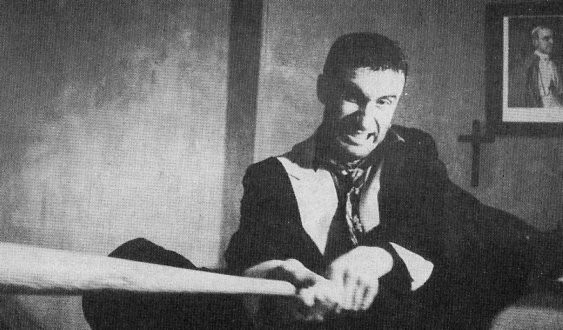
The late Lance Curtis in ‘The man You Know’ by Steven Jacobs. The film deals with a complex range of social and political questions and satirises the peculiar combination in Australian politics of “conservatism, apathy, the profit motive and rampant pragmatism.

The demise of the Sydney Filmmakers Co-operative has left a large gap in the distribution of independent films and video in Australia. But while, in the long term, there are still many obstacles to the establishment of an effective independent distribution service, for the present the Australian Film Institute (AFI) has come to the rescue with Shooting Gallery.

Shooting Gallery brings together a wide range of films and videos which have been produced with the assistance of the Creative Development, No Frills, and Women’s Film Funds of the AFC. The films are organised into nine programs which will be screened across Australia over the next few months. The films range from professional, mainstream oriented documentaries to open-ended dreamlike reminders of Super 8 film festivals.

Some, such as Red Matildas, Kemira — Diary of a Strike, Song of Ceylon and Munda Nyuringu. have been screened before. But, as independent films generally receive such brief commercial seasons, another opportunity to catch up on those you may have missed the first time round is always welcomed.

For other films, particularly those in the “Best of No-Frills Fund”, Shooting Gallery may provide the general public with one of the few opportunities to see what is happening at the grassroots level of Australian filmmaking.

Program 1 of Shooting Gallery opened with Flotsam Jetsam, an energetic and colorful song clip by Lucinda Clutterbuck. Based on dancers who had been animated to bounce and flow across the screen, the two-dimensional stick figures moved with such energy you could almost see the dancers fully formed beneath. Red Matildas, by Sharon Connolly and Trevor Graham, concluded the first program. Lots of historical footage cut with modern-day interviews created an enthusiastic and informative picture of three Australian women’s involvement with socialism and anti-fascism, beginning in the depression days of the early ’30s.

Punching Keys, by Sally Ingleton, is a highlight of Program 2. It is a dramatised documentary, questioning the application and side effects of modern office technologies on women VDU operators. The image was manipulated by the wonders of video technology to describe the depersonalisation and stresses of computer technology.

Among films to look forward to in later programs are Kay Self’s Portrait of Psyche, Steven Jacobs’  The Man You Know, Patricia L’Huede’s and Mark Mcleod’s Rapunzel in Suburbia, about the life and work of writer Dorothy Hewett.

At a period when the future of independent film-making is still under a cloud. Shooting Gallery is an opportunity not to be missed.

‘The Tiger in the Head’ by Robin Gurr (1990)

9 Jun

The Tiger in the Head by Robin Gurr. Jacaranda Wiley 1987. First published in SCARP No 16. May 1990

The title of Robin Gurr’s sixth collection of poetry, The Tiger in the Head, is echoed in her poem ‘The Visionary at Dawn’:

Inside the cherished

chaparral of his skull

.

nestles a stealthy drowsing

tiger

While the poem has, as its departure point, Rousseau’s painting ‘The Sleeping Gypsy’, there are also very deliberate and unmistakable echoes of William Blake. The most obvious refer­ence to Blake is the image of the Tiger. Compare, for example,

a tiger

stalks in emancipated bliss

 .

flashing poems from its sulphurous eye

with

In what distant deeps or skies

Burnt the fire of thine eyes

                                                                 (Blake)

or

Inside the harsh

Saharas of his skull

,

a tiger

rasps into its pondered mash

(Gurr)

with

What the hammer? What the chain?

In what furnace was thy brain?

                                                     (Blake)

Gurr’s concentration on light and dark, day and night in the opening poems of the collection also recalls Blake. This dichot­omy recalls the Songs of Inno­cence and Experience and, indeed as we progress through The Tiger in the Head, we come across poems with titles like ‘Child in nature’ and ‘Three meetings: Dark, Fear and Death.

For Gurr a celebration of youthful life and naivety is fol­lowed by the realisation of death in the same way as night follows day:

The sea mouths the morning

Then spits it on the shore

The stippled shells hold warnings

that night will come once more

                                                                ‘Shells’

In these poems Gurr moves from the very strict rhythms and rhymes of a poem like ‘Shells’ to the apparent freedom of ‘The Visionary at Dawn’. Her best poems however, are those she keeps under a tight rein. The Plath like ‘The Cutting of the Wind’, with its carefully meas­ured lines which have the effect of emphasising each word, is an example of Gurr at her best:

My face is turned by blade

my mortared limbs were

.

cast in clay  earth locked

and burnt to strength

While the highly structured nature of Gurr’s poetry at first seems a little ‘old fashioned’ when compared with the current directions of contemporary po­etry, her obvious skill at utilising traditional forms quickly over­comes any reticence in her read­ers. She doesn’t allow the struc­ture of the poem to dictate to her, rather she uses it to mould her ideas, constantly surprising the reader with unconventional rhythms and sound patterns. Indeed Gurr’s poetry repays a careful reading.

The Tiger in the Head i s a very accomplished collection by a poet who is obviously in complete control of her genre. While the book has been handsomely pro­duced by Jacaranda Press my only complaint is that there is no listing of her five previous collec­tions. This is going to make track­ing her earlier work down diffi­cult for those many readers who may want to read more of Gurr’s work.

– Mark Roberts

Going Down Swinging still going strong (1989)

17 May

First Published in Editions Issue 2 September 1989

Going Down Swinging Issue 9, 1989

Distribution has always been a problem for small literary magazines. The eco­nomics of producing a literary magazine means that, in most cases, editors would have to pay one of the mainstream distribu­tors to take on their products. Most maga­zines, therefore, rely on direct sales to a handful of more or less sympathetic book­shops and subscribers. Even here, howev­er, things are not all they should be. Bookshops will generally take between 25% to 40% of the retail price of the magazine and, as most bookshops will only take mag­azines on a ‘sale or return’ basis, the editors only get paid for the number of issues sold (or so the theory goes). Building up a sub­scription list can be just as daunting.

Without the funds for effective publicity campaigns most magazines are forced to rely on ‘word of mouth’ and mentions or free ads in other magazines to attract poten­tial subscribers.

There have been various attempts to change this situation by setting up co-oper­ative based small press distribution net­works and small press publicity campaigns. But to set up such a project costs money and the funding authorities, for the most part, seem content to hand money out to a handful of magazines on an individual basis rather than to build up an  infrastructure which would help all magazines.

Recently a group of six magazines com­bined resources to produce what they call ‘The Small Press Package’. This scheme is essentially a sampler: for $21.50 you get the current issues of all six mags. Presumably, once you have a copy of all the magazines you can then decide which ones to sub­scribe to.

The six magazines on offer are Going Down Swinging ‘a prose and poetry maga­zine that publishes the writing of new, unknown, and/or young writers’; On the off beat ‘a publisher of women’s short sto­ries and a focus for continuing support of good contemporary women’s fiction’; Studio a Christian literary journal ‘publishing poems, short stories and articles from established, new and aspiring writers’; Brave New Word  ‘a publisher of contempo­rary Australian short stories and poetry, and sometimes interviews related to Australian writing and publishing’; Writing ‘a magazine coordinated by the Victorian Community Writing Committee. Writing gives preference to unpublished, or as yet unpaid writers, and to writing groups’; and The Famous Reporter ‘a short story maga­zine publishing the work of both new and established writers in a wide range of styles and themes’.

One of the most ‘established’ of these magazines is Going Down Swinging which has just published its ninth issue. It was established by Myron Lysenko and Kevin Brophy in 1980 and has produced an aver­age of one issue a year since. Like many magazines it seems to have been born out of a feeling that the existing magazines were ignoring a section of the writing and reading community. In the editorial for the ninth issue Brophy and Lysenko, along with Associate editor Nolan Tyrrel, make the point that it is through magazines like Going Down Swinging that many writers make their first contact with editors. The comment and reaction they receive can be the first steps away from keeping their work to a small circle of friends’. Going Down Swinging has therefore always had a policy of ‘reacting specifically and personally to all submissions’.

Probably as a result of this policy Going Down Swinging has become one of the more innovative magazines in Australia, consistently publishing original, interesting and non-mainstream work by new and/or unknown writers. Issue number nine is a good example of the success of this policy. The work in the issue ranges from the real­ism of Leah Nischler’s opening piece ‘Barbara Cartland does a bunk’ to the fast-moving prose in Doreen Sullivan’s ‘Johnny Fish-Face’ and the measured emotionalism of April Phillips’ (I’m sure that’s a pseudonym) ‘Cage, manger, rack’.

There is also some impressive poetry in this issue. Colleen Farrell’s seven poems stand out. Her opening lines are constantly a particular highlight, an example being the Plath like opening of Ten Tulips’:

‘Do you know the dying stages of a

tulip? I do I’m learning.’

I also liked Rosanne Musu’s descriptive poem ‘Ship building’ and Christine Lindberg’s ‘All that jazz’

It’s interesting to note that the majority of work in this issue of Going Down Swinging is by women. Their confident experimentation is in contrast to the gener­ally ‘safer’ more literary work by the male contributors.

Another strength of Going Down Swinging has always been its reviews and interviews. Over the years it has contained interviews with writers such as Peter Carey and Murray Bail. In this issue there is a very interesting interview with Adelaide writer, performer and, most recently, chil­dren’s verse writer, Jenny Boult. Boult, who has been a long-time champion of small presses paints a gloomy picture of creative writing in the late 1980s: The sixties and seventies were boom years for poetry but the late seventies and eighties have put the lid on it to a great extent… publishers .are tending to publish much more mainstream, popularist kinds of poetry rather than tak­ing risks with new people and different styles of writing.’

If you’re interested in writing outside of the mainstream then Going Down Swinging number nine will provide you with an enjoyable introduction to a range of new(ish) innovative writers. Or better still choose from a cross-section of small liter­ary magazines from the Small Press Sampler.

Going Down Swinging is published once a year and a subscription costs $10.00 for two issues from PO Box 64 Coburg, Victoria 3058. For more information on the Small Press Sampler contact Walleah Publishing, PO Box 319 Kingston, Tasmania 7051. (All six magazines cost $21.50, any five $18.50, any four $15.50, any three $12.50).*

Mark Roberts is an editor  of P76 magazine and has had wide experience in small press publishing. He will be writing a regular col­umn on small presses and magazines for Editions.

—————————————————————————————–

*NOTE: The contact details and prices above are now out of date.

  • Going Down Swinging is still very much in existance and can be contacted through it’s website: http://www.goingdownswinging.org.au/
  • Brave New Word is also still around – though it will fianlly end publication later this year. It can be contacted through Walleah Press  http://walleahpress.com.au/
  • Interesting to note that Walleah Press were responsible for the Small Press Pacakage.

Installing Peace – Peace and Nuclear War in the Australian Landscape. (1985)

14 May

Peace and Nuclear War in the Australian  Landscape. An installation devised and assembled by Darani Lewers, Tanya Crothers and Jan Birmingham. At the Adelaide Festival Centre Gallery March 29 – May 5 (1985), the Gryphon Gallery Melbourne June 8 – July 26 (1985). Ivan Dougherty Gallery Sydney August 17 – September 7 (1985). Previewed by Mark Roberts. First published in Tribune 2369, 27 March 1985

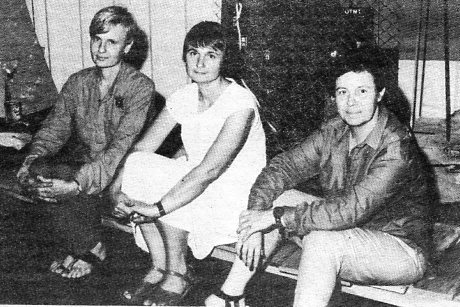
Darani Lewers, Tanya Crothers and Jan Birmingham (left to right) sitting on a section of the 'duck board' whihc weaves through their installation 'Peace and Nuclear War in the Australian Lanscape'. - Photo: Mark Roberts

Darani Lewers, Tanya Crothers and Jan Birmingham (left to right) sitting on a section of the ‘duck board’ which weaves through their installation ‘Peace and Nuclear War in the Australian Landscape’.

Darani Lewers, Jan Birmingham and Tanya Crothers took almost three years to create Peace and Nuclear War in the Australian Landscape. The installation was assembled in a studio situated in an old wool shed in Ultimo, but its official opening will take place in Adelaide on March 30 to coincide with the Palm Sunday Peace Rally.

Dominating the installation are a number of constructions and large hanging canvasses on the theme of peace. These canvasses are divided into two groups. The ‘bush canvasses’ affirm life by evoking natural patterns of birth, growth and regeneration, while the ‘urban canvasses’ are concerned with human cycles of rest, work and leisure. The bush canvasses represent both original, unspoilt images of the Australian countryside and the cultivated landscape of modern agriculture. Pieces of a car, cricket stumps, a goal post, a tennis racquet and a wall of torn posters for rock bands are used in the urban canvasses. The images of peace conveyed by these canvasses is not always a happy one. There is a recognition that pain and suffering can be a basic part of nature. As Jan Birmingham pointed out, “there is a possibility of perfection in nuclear war. Peace is not perfect, but it is infinitely preferable to nuclear war.”

Connecting these various images of peace is an unstable ‘duckbord’. The duckboard was designed and constructed by Frederick Chepeaux and was based on the duckboards at the bottom of trenches in World War One. It snakes its way around the canvases and past various images of war, which, although not as imposing as the peace images, covers a large section of the floor and threatens to engulf peace.

A further dimension is added by the unstable nature of the duckboard. While most of it is built on top of bricks, a number of sections are supported by large inflatable rubber tyre tubes.  When you step onto an unstable section you feel as though you are about to be ‘tipped onto the X-rays of different parts of the human body, assorted charred pieces of ‘human debris and horrific newspaper headlines about nuclear war.

There are two videos incorporated into the body of the installation. Simply titled ‘Peace’ and ‘War’ they were produced for the installation by Sally Bongers and Paul Elliot. A grant from the Music Board allowed the artists to commission a young Sydney composer, Wendy Hiscock, to write a 15 minute piece of music.

The strong emphasis on peace is intended. Jan Birmingham explained how they had begun to work with the idea of using images of war, but realised that powerful sections of the media have appropriated many of the more terrifying images of war and made them seem glamorous and exciting. So the installation now concentrates on “the concept  of making peace stronger”. What is emphasised is not the act of destruction, the mushroom cloud and missile systems, but what would be lost, the familiar images of the Australian landscape which we take for granted.

A number of related activities have been designed to take place around the installation while it is in each city. In Adelaide it will be part of a larger exhibition in the Festival Centre on the theme of Peace and War. A peace conference will also take place in the Centre featuring Dr Trapeznikov from the Soviet Union and Dr Abrahams from the USA.

In Melbourne a seminar run by the Arts and Craft Teachers Association on a proposed peace curriculum will be run in conjunction with the installation. While in Sydney a number of events, including a Conference on Positive Peace Practices and a poetry reading organised by the NSW branch of the Poets Union will take place.

It is hoped that the installation will be able to continue touring after September. But that depends on the amount of support generated over the next six months. So make an effort to get along and see it when it is in your city.

Finola Moorhead Remember the Tarantella Primavera Press 1987

23 Apr

Finola Moorhead Remember the Tarantella Primavera Press 1987. First Published in P76 Issue 5, 1991

NOTE: Remember the Tarantella rereleased in a new edition by Spinifex Press in 2011 with a new Afterword.

Finola Moorhead’s Remember the Tarantella attracted some interest when it first appeared towards the end of 1987. It was briefly reviewed in a number of the major papers and was the subject of a number of lengthier articles in a handful of journals. It did not, however, go on to be nominated for any of the major awards, or indeed attract the sort of attention that Kate Grenville’s Joan Makes History received during the bicentennial year.

The failure of Moorhead’s novel to attract major critical attention says much about the current state of publishing and criticism in Australia. Remember the Tarantella is one of the few major Australian novels of the past decade. But while the Australian publishing industry continually trumpeted its own praise while at the same time at threatening to devour itself in a frenzy of takeovers and buybacks, it was left to a Primavera Press, a relatively small publisher, to pick up and run with Remember the Tarantella. Primavera did an admirable job launching the book, and they probably did as much as they could to promote it. The fact remains, however, that for a book by a small publisher to gain the important column centimetres in the major Saturday book pages, the book has to be extraordinarily good – or the publishers have to rely on the old girl/boy networks.

The reviews that did appear seemed somewhat guarded in their response. One had the feeling that while they recognised the importance of Moorhead’s novel they also felt that there was something about it that pushed it off to one side of the mainstream.

What was it then that led to this undercurrent of ‘unease’ among ‘serious’ reviewers. The answer, I believe, can be found in the opening of Moorhead’s ‘Author’s Notes’ to Remember the Tarantella.

“Perhaps Remember the Tarantella started with Christina Stead’s challenge to me – it’s very difficult to make an interesting novel with no men in it.”

While much has been made of the ‘success’ women writers have ‘enjoyed’ in Australia over the past decade or so, there still remains a number of institutionalised barriers to certain   kinds  of  womens’ writing. The literary mainstream has long used literary genres as a tool to defend ‘literary standards’. If something can be pushed into a category such as ‘community writing’ or ‘Black writing’ then it ceases to be a threat to ‘real’ literature. It can be examined in terms of its own genre which, it is understood, is inferior to real literature. Such a response is not of course, always conscious and it would appear that it has, to an extent been part of the baggage that many   reviewers   have brought to Moorhead’s novel.   Overall,   critics in Australia have appeared reluctant to see Remember the Tarantella as part of the mainstream of Australian writing. Rather, they  have   argued, its complexity and scope  make   it   one  of  the major achievements of the women’s writing movement in Australia. Such mariginalisation is unfortunate because,  by marginalising some of the more dynamic forms of contemporary writing, these critics eventually marginalise literature itself.

Remember the Tarantella is a great, swirling novel. Like the dance from which it takes its name it seems, at first, to be out of control rushing back and forth, spinning wildly, even somersaulting. But all these movements are part of an overall pattern, the steps of the dance, and in the same way that the movement of a dance may be unintelligible if you are in the midst of it, Remember the Tarantella demands  that you step back and ponder the structure of the dance/novel.

Moorhead hints at one pattern in her ‘Author’s notes’. Besides men in fiction Moorhead also discussed mathematics with Stead and as a result there is the “daring to make a novel out of geometry”. In fact according to the author, the first draft “was a series of diagrams and nouns. No sentences”. This geometry provides the novel with its structural depth, it also sets up an almost unconscious rhythm to the narrative. The novel concludes with a highly structured dance which brings together a number of structural features of the novel. The 26 women in the dance are identified by letters of the alphabet. There are also  26 major characters in the novel – from Arachane through to Zono. The dance itself is highly structured. It forms geometric shapes which dissolve and reform. One feels that there are many years of research in front academics in relating the structure of this final dance to the overall structure of the novel.

There are also other structural elements running through the novel. The alphabet is obviously central to the work , as is numerology and astrology. There is also an international network of women which provides numerous anchoring points for the narrative. Each woman in the novel affects every other woman in the novel. The result is that Remember the Tarantella becomes a highly structured network of crisscrossing webs.

In the end we are left with what Moorhead has called ‘everywoman’ – the 26 different women, different aspects of the ‘everywoman’, united in their network yet often contradictory, even hostile. This web or network, is the dance, the tarantella the collective memory that can only be realised by bringing the 26 women together in the final dance.

But while the structure of Remember the Tarantella is no doubt challenging, its strength lies in the number of ways in which the novel can be read. While it is easy to become overwhelmed by the swirling structure – caught in the web if you like – it is also possible to read Moorhead’s novel as a vivid representation of the lifestyle of 26 different women during the early eighties.

Moorhead’s novel then, is a major achievement by anyone’s standards. Its expansive scope and its complex yet intricate structure sets it apart from much of the more mundane mainstream literary activity in Australia during the late eighties. It is to be hoped that the next few years will see it receive the recognition it deserves – both in Australia and overseas.

– Mark Roberts

Fassbinder’s The Bitter Tears of Petra Von Kant misunderstood.

22 Apr

The Bitter Tears of Petra von Kant, a play by Rainer Werner Fassbinder. Presented by the Sydney Theatre Company at the Wharf Theatre (May 1986). Reviewed by Mark Roberts. Published in Tribune No 2423, May 1986.

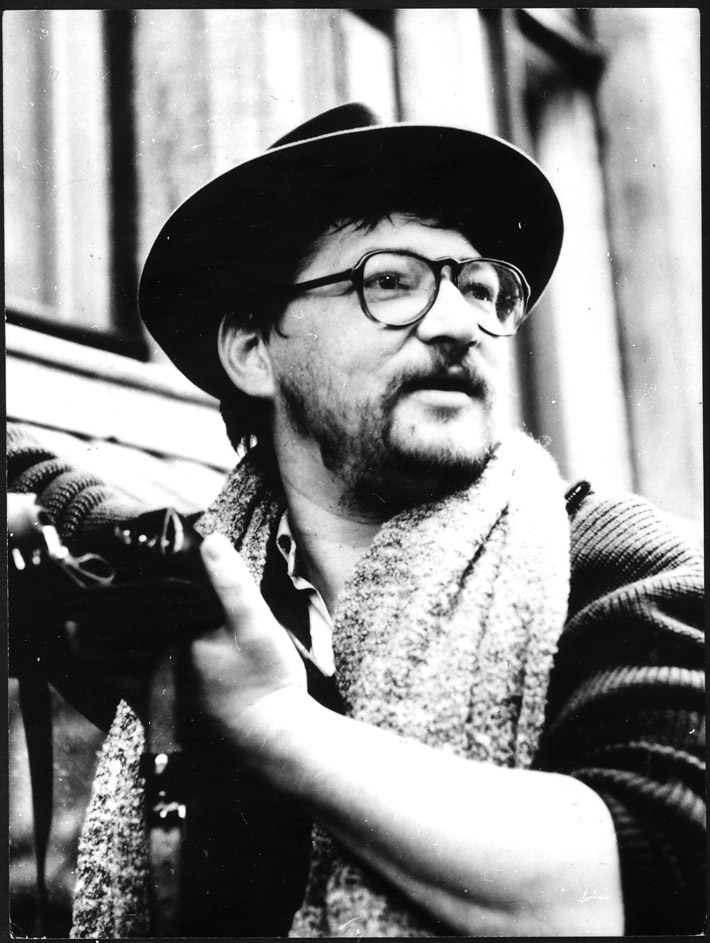
Rainer Werner Fassbinder

Fassbinder’s prolific output during his brief career meant that sometimes his work was, of necessity, written rather quickly. This is particularly true of his plays and, while most of the rough edges can be ironed out during rehearsals, it helps if the director and cast are sympathetic to Fassbinder and understand the issues he returned to again and again in his work.

Sadly, this doesn’t appear to be the case with the Sydney Theatre Company’s production of The Bitter Tears of Petra Von Kant. The play revolves around notions of personal power based on class and economic distinctions. Essential to Fassbinder’s notion of power is love, which he once said is “the most effective form of social repression”.

Petra Von Kant is a successful, divorced fashion designer. She has an assistant Marlene (Marta Kiec-Gubala). who is silent throughout the entire play. Marlene is treated with incredible coldness by Petra but, nonetheless, is essential to her success.

Petra is introduced to, and initiates a relationship with Karin (Andrea Moor) a young model who has recently returned to Germany after traveling to Australia.

At the centre of the production’s failure is the character of Petra. Director and translator. Mark Gaal, seems to have attempted to make her a reflection of Fassbinder’s own life, so there is a concentration upon her self-indulgence and self-destructiveness.

The result is that Petra seems to be distanced from the principal concerns of the play. Karin is also far too obvious. The essential points are made, but they would have been far more effective if they had been a little more subtle.

In the final instance, the Sydney Theatre Company’s production of The Bitter Tears of Petra Von Kant is extremely frustrating. The heavy-handed nature of the direction and the over-acting of the major characters means that Fassbinder’s major concerns are pushed aside.

Blair by John A. Scott

11 Apr

John A. Scott, Blair. McPhee Gribble/Penguin 1988. First published in LINQ Vol 16. No3. 1988

While St Clair firmly established John A. Scott’s credentials as one of Australia’s leading poets, it is not widely known that he began his writing career as a television comedy writer. Blair, Scott’s first novel, shows, that despite six books of poetry and a teaching position in Canberra, he has not lost his ear for comedy.

Blair, above everything else, is a very funny book. The main charac­ter, Eric Blair (as in George Orwell), is a middle aged British academic-in-exile who is teaching at a small institution in Melbourne called the Centre for Human Achievement. Blair stumbles from the one comic situation to the next, at times taking on the dimensions of a tragic ‘anti-hero’, and at other times becoming more like a one man slap-stick comedy show.

While Blair can turn a simple procedure, such as lighting a match or answering the telephone, into a comic epic, he does have weightier matters on his mind. Blair is searching for love, or at least for another sexual encounter, and he believes he has found it in the person of Julia Brouwer. Having once been married and having “misplaced” his wife in the second year of their marriage — “as with a necessary text for an impending tutorial tossed upon his desk, she simply disappeared from view” — Blair is sadly out of practice in matters sexual. His pursuit of Julia leads him to a screening of Murnau’s Dracula which ends in chaos, a frantic attempt to hide from a colleague in a sex shop and numerous discussions of the Elizabethan and Metaphysical poets with his beloved.

At the same time as he is running after Julia, Blair is also running from his mother. Having managed to ship her back to Britain fourteen years before, she is showing increasing signs of wanting to return to Melbourne. To add to his problem Blair is also having disturbing dreams which involve chopping his mother into small pieces and hiding her in a suitcase.

What makes Blair more than just a funny story is the often complex way in which different incidents are linked together by the narrative. Blair’s dreams about cutting his mother up, for example, are recalled when he quotes Freud from memory, “every dream reveals itself as a physical structure which has meaning and which can be inserted at an assignable point in the mental activities of waking life ….*’ Blair’s mother is recalled once again in a tutorial on D H Lawrence’s Sons and Lovers. When Blair, confronted with the tutorial’s complete ignorance of the novel, attempts to start a discussion on the notion of the “crippled hero”, one feels that the term could apply as much to Blair as it does to Paul Morel.

The Sons and Lovers incident illustrates one of Blair’s strengths. It is easy to feel that, because of the interconnected nature of much of the narrative, there must be a ‘deeper’ level to the novel. There is, for example, the mother/son/lover triangle. There is also the significance of the names that Scott has chosen for his characters. Eric Blair, for example, suggests Orwell, and Julia was the main female character in Nineteen Eighty Four. Other names also have an air of significance about them. Colonel Proctor, the arch-royalist with a love of artificial limbs; and his children, Hymen Proctor, a gay photographer “so named by his mother out of her initial deep respect for marriage”, Celica Proctor and “little Sarah Proctor”. Then there is Blair’s ex-wife, Felicity Greenwood, his colleague at the Centre for Human Achievement, E.G. Brodly, the “greatest living poet”, Edward Finchley and Blair’s ex-student, Fabian Purvis.

But it is difficult to know how seriously Scott intends us to take all this. A small group of Melbourne intellectuals and writers will, no doubt, recognise themselves and their friends/enemies in Blair and perhaps the characters’ names and a number of the incidents in the novel will take on deeper significance. For the rest of us, the novel becomes something of a satiric game. Scott has, for example, given the reader all sorts of clues to find what is, ultimately, useless information. At the beginning of the novel we are told that “little Sarah was now half her half-brother’s age. Eight years ago she was half the age of her half-sister who, twenty-two years ago was half the age of their half brother.” In order to make it easier Scott tells us later in the novel that “little Sarah” is nineteen. By which time, of course, we already have a good idea of the Proctor children’s’ approximate ages.

But Scott’s playfulness, ultimately, has a satiric bite to it. Anyone who has spent anytime at all at a CAE or university will recognise the attitude behind the statement made by the head of Literary Studies at the Centre for Human Achievement when he tells Blair and Brodly that a philosophy lecturer is not having his contract renewed: “Should’ve worked harder on tenure. Wasted too much time in the classroom.” Blair, Brodly and the rest of the Centre for Human Achievement, it seems, would feel perfectly at home on the campus of just about any tertiary institution in Australia.

While Blair may not be ‘great literature’ it is, nevertheless, a very entertaining and humorous read. Be careful, however, reading it on public transport. Private laughter in public places can be quite emba­rrassing.

Literary Magazines Turn Full Circle at Word Festival (1989)

2 Apr

‘Literary Magazines Turn Full Circle at Word Festival’. Published in Issue 1 of Editions: The New Monthly Australian Review of Books, August 1989

Collected Works Bookshop as it is now.

Tom Shapcott, speaking at the Australian National Word Festival in Canberra earlier this year, claimed that a major concern facing the Literature Board (apparently now renamed the Literature ‘Unit’) when funding literary magazines was knowing when to ‘kill’ a magazine off. Although Shapcott was referring to the larger literary magazines which have become dependent on their annual injec­tion of Australia Council funds to keep afloat, such a comment coming from the director of the Literature Board must have been greeted with some irony by those in the audience who have been involved in the production of a small magazine and whose major concern was how to keep a magazine ‘alive’.

The literary magazine debate at the 1989 Festival had indeed come full circle. Four years ago editors of small magazines virtually invaded the 1985 Festival. They held a meeting with the Literature Board (which included both funded and non-fund­ed magazines), ran their own very popular session at the Festival and sold small press publications in direct competition to the Co­op Bookshop stand.

In the months leading up to the 1985 Festival a group of predominately Sydney editors had attempted to create an Australia-wide lobby group of magazine edi­tors and workers and small publishers. This group, known as Small Magazines And Presses (SMAP), did have some early successes. A number of articles on small literary presses appeared in the arts pages of the major dailies and the ABC radio pro­gram Books and Writing produced a special report on small presses. In Sydney Neil Whitfield, former editor of Neos (a maga­zine devoted to publishing creative writing by writers under 25) set up a small press stand at Harkers Bookshop in Glebe.

Shortly before SMAP took off in Sydney, Collected Works Bookshop opened in Melbourne. Collected Works attempted not only to be a small press bookshop but also to distribute Australian and international small press publications. Although not directly related to SMAP it is possible to see Collected Works as port of a ‘small press push’ in the early to mid eight­ies. A push which, for a while, seemed as though it was going to force the literary establishment to take notice.

Despite promising so much at the 1985 Word Festival SMAP eventually died a slow death. The problems that plague editors of small magazines were compounded with SMAP. The main movers behind SMAP were magazine editors who suddenly found themselves not only juggling employment commitments, editing, funding, producing and distributing a small literary magazine but also attempting to set up an Australia-wide lobby group of small presses and even examining proposals for a national small press distribution network. In retrospect it is not a surprise that SMAP collapsed, but that it got so far along the track, with virtu­ally no support from the federal or state arts bodies, before the wheels fell off.

So, was it worthwhile? Well there were some spin-offs. Contacts were made, a net­work was set up between magazine editors in different regions and, for a period, liter­ary magazines and journals gained at least a little of the literary spotlight. SMAP also kept careful records and if, in the future, small magazines and presses are in a posi­tion to lobby collectively for a better deal from the literary establishment, much of the groundwork will already have been done.

The whole area of small cultural maga­zines is, with a few exceptions, is virtually ignored by the major newspapers and radio programs which claim to have a cultural bent. SMAP attempted to change this, and for a short while perhaps it did. Even when the literary or cultural establishment does make a concerted effort to acknowledge the existence of literary journals, it is generally a very blinkered, conservative acknowl­edgement. A good example of this occurred a number of years ago when Books and writing introduced a regular literary maga­zine segment. Almost exclusively the reviewer concentrated on the established, Literature Board funded magazines like Meanjin, Island, Quadrant and Overland.

Over the coming months in EDITIONS I will attempt to do something quite differ­ent. To fully appreciate the importance of small magazines and publishing, one has to look beyond the established magazines to the diversity that exists across the whole range of literary and cultural publishing. So while I will be following the creative and critical writing appearing in the major jour­nals, I will also be searching out the innova­tive, outrageous or merely interesting among the smaller, and often more vibrant, magazines. At the same time I intend to highlight the politics of small press publish­ing and to look back at some of the more influential literary magazines of the past twenty years in an attempt to understand the context in which contemporary maga­zines are operating today.

While Harkers Bookshop closed some years ago Collected Works Bookshop is still going strong in Melbourne. After a number of moves they are now on the 1st Floor of the Flinders Way Arcade, 238 Flinders Lane Melbourne 3000 (03 654 8873).

Mark Roberts is an editor of P76 magazine and has had wide experience in small press publishing. He will be writing a regular col­umn on small presses and magazines for EDITIONS.

____________________________________________________________________________________________________

Please note that the address and contact details in the above article date from 1989. COLLECTED WORKS BOOKSHOP is still going strong some 22 years later. It is now at Nicholas Building, Level 1, 37 Swanston Street, Melbourne, VIC 3000. Phone 03  396548873. It is on Facebook at http://www.facebook.com/pages/Collected-Works-Bookshop/175023895845165

Funding Art in Australia – An interview with Donald Horne

29 Mar

First published in The Tribune Winter Reading Issue (No 2388)7 August 1985

Professor Donald Home has been chairperson of the Australia Council, the Commonwealth arts support body, for over six months. Recently, he talked to Mark Roberts about the way the arts are supported in Australia, as well as discussing some of the problems he has already encountered in the council, and his hopes for the future.

.

In What Price Culture? David Throsby and Glenn Withers point out that, based on 1981 census figures, more people were employed by the arts than were employed by mining and agriculture — a point you also made in your inaugural address as chairperson. How important do you see economic considerations, such as potential for employment, tourism, and so on. being in determines the direction of the government’s arts policy in the future?

Whether people like it or not, I think it’s pretty obvious that manufacturing, as the principal dynamic in society, is no longer working. In purely economic terms, we have to look towards labor-intensive service industries, otherwise the economic plight will simply get worse.

Now, it happens that the arts are an extensive industry. Art and entertainment add up to a couple of billion dollars worth of activity each year, and if you add to that the information industries you can add a few more billion dollars. I can’t be exact, but I’m talking about industries which are worth several billion dollars.

When one adds to this the fact that the arts are not only an economic multiplier, but also a social and cultural multiplier in an economy in which jobs are becoming even less and less interesting, it can make more sense to implement arts support schemes than it does in periods when the work ethic seems to be operating at its full volume.

We should be looking at ways to provide unemployed people — and employed people — with other views of life rather than just the economic.

.

Since you’ve become chairperson of the Australia Council, there seems to have been a greater level of debate within the arts community over the role the council plays in funding, and to an extent, determining what art is produced in Australia. Do you think this level of debate is a healthy sign?

Well, there has always been a number of debates, there’s nothing new about it, actually. Naturally, if the resources are scarce, and they’re allotted one way, the people who didn’t get what they wanted will have criticisms. That is a perfectly necessary and essential feature of any government arts support policy.

At the same time, it is essential that there should be diversity in any system of support for the arts. In other words, the Australia Council, the Australian Film Commission, and the state arts agencies and others are essential. You don’t want to have just one centralised, bureaucratic art support scheme.

Some of the particular debates that have have arisen have been, first of all, the fact that the Theatre Board recommended (and the council accepted its recommendation), that there should be a ceiling placed on the money given to the major theatre companies. The idea behind this was that some of the extra money could be diverted to minor theatre companies. This seems to me to be a perfectly defensible position.

I think it would be wrong if all the funds of the Australia Council went to just a few companies. That would really be setting up a kind of state monopoly.

It is important that minor companies should be encouraged — partly because they might be more innovative or they might introduce things that the major companies wouldn’t introduce: but also because, as major companies decline, minor companies come up. So. in this way. the council is maintaining the market a bit.

Then there is a second controversy; and that is the question of the Australian Opera. Here, the council’s policy is that the Australian Opera should be maintained as a national organisation fulltime. However, the Australian Opera had asked for an extra million dollars in subsidy, and the council simply couldn’t find an extra million dollars.

In this context, it is worth pointing out that, at present, a quarter of the council’s total grants go to two companies, the Australian Opera and the Australian Ballet. In fact, the Australian Opera, along with the accompanying orchestra, actually obtains more in grants than the Literature Board and the Visual Arts Board combined.

So the council felt that it couldn’t be expected to provide more money for the Australian Opera. However, it has put up a scheme where the council would provide the base support for the opera while the states would make contributions depending on the amount of time the opera spends performing in particular states.

.

In your inaugural address, you talked about the Canadian and British models of government arts support bodies in relation to the development of the Australia Council. In the last Fringe Network Newsletter there is an article by Michael Volkerling, the head of the Queen Elizabeth II Arts Council of New Zealand, where he discusses the importance of regional groups to the overall decision making process of the New Zealand Council. Do you think that the Australia Council could learn from the New Zealand experience in helping to overcome claims of “state bias”?

We already have it in Australia; we have the state support agencies. We have a better model than New Zealand, we have federation — just as in the US there is a federal body and there are state branches. The diversity is built into our model already.

I certainly believe that there should be continual and growing co-operation in certain ways between the Australia Council and the states. But, overall. I think we already have that.

.

On the figures for state government support for the arts — certain states contribute more to funding arts in their state than others. Do you feel that this is putting pressure on the Australia Council to subsidise those states where the state governments aren’t funding arts to the same degree as other states?

I don’t think the council is making up any lost funding. The council funds most where there are the most applications. So far as I’m aware, in the past it has not had a policy of trying to build up areas irrespective of where the applications come from.

If you are speaking specifically about NSW, it happens that NSW, for reasons that have nothing to do with the state government, generates a lot of funding applications. It would seem that a lot of artists and writers live in NSW.

The area the council is particularly concerned with is Queensland where the number of applications is disproportionately low. If you compare Queensland with South Australia there is a very big difference in the proportion of applications.

For the first time in the council’s history I think, they’re showing a concern about this unevenness and it’s having a special inquiry which will involve, among other things, an internal examination. We’ll be trying to work why it is that the proportion of Queensland applications is so low and what can be done about it.

.

Ted Hopkins, in his paper Deconstruct the Australia Council, discusses what he sees as the limitation of the way the council is structured into various art form based boards. He suggests that these boards are symbols of idealised “pure” art forms. I am also personally aware of a number of cases where people have been told that their submissions don’t fall within the boundaries of one board, and to take it to another board, where the same thing happens again. (It seems that it happens most often between the Literature and Visual Arts Boards.) Do you think there are many problems in the current board set-up?

I think that there are problems in having a board structure, though I don’t agree that the Council is doing anything particularly odd in this. They are just the normal divisions, and all divisions are somewhat arbitrary.

What should offset that is co-operation between boards and a certain firmness in inter-arts considerations. I don’t think we could just abolish the boards and have everybody sitting around on some inter-arts committee looking at all the applications because arts are inter-related. It would be much worse than the present system.

The present system has limitations and I’m sure that members of the council are interested to hear criticisms of those limitations.

.

At the recent Conference on Culture, the Arts, Media and Radical Politics, there was some discussion of the difficulty young artists and artists from minority groups have in getting to know about how the council works, and how to use the council. Do you think this is a major problem — that once someone knows how to “write” submissions, they have a definite advantage?

I think this is a major problem and we’re making Queensland a kind of paradigm case of that. Once we’ve investigated Queensland fully, I think we’ll have a lot more to say about it.

There’s another problem, of course, and that is that you could spend the whole budget on “missionary” activity. There is a limit — and whether the council is spending the right amount on this or not is a matter for debate.

Sidetrack Theatre presenting LOCO to workers at the Chullora railway workshop in Sydney during the mid 1980's. The project was funded jointly by the Theatre and Community Arts Boards.

Well, yes, that is always a difficulty in any period of reform. In some ways the Community Arts Board, or the Community Centres, when initiating programs, should be, as it were, a kind of vanguard.

I think there are times when what is described as interference is essential because people simply don’t know the alternatives. They don’t know what is available. Then comes the time when, if things are generated, you perhaps have to be more concerned with the community’s initiatives.

The big new development, I hope, would be in community groups — not only local government but also, for instance, in joint funding arrangements in, say. Aboriginal communities, or areas of great unemployment. ■