Tag Archives: Australian Poetry

Memories of ‘The Friend in Hand’ and Rae Desmond Jones

6 Feb

Last weekend Linda Adair and I attended a double book launch at the Friend in Hand pub in Glebe. Nothing too remarkable there, I have been to many book launches at the Friend in Hand, indeed my own book launch took place there (https://rochfordstreetreview.com/2016/03/16/decades-of-percolation-anna-couani-launches-concrete-flamingos-by-mark-roberts/). But, as I listened to Margaret Bradstock launch Les Wick’s Belief and Anna Couani launch Kit Kelen’s  Poor Man’s Coat: Hardanger Poems, I had what is commonly referred to a flashback to the first launch Linda and I had organised at the Friend in Hand.

Back in late 2012 the launch of two Rochford Press books took place at the Friend in Hand, P76 Issue 6 (The Lost Issue) and The Selected Your Friendly Fascist edited by Rae Desmond Jones. Both these titles were nostalgic in their own right. Issue 6 of P76 had  been over 15 years in the making. Linda and I had created the original layout for the issue in the 1990s on an old Mac and then lost the disk in the confusion of babies and house moves, only to discover it years later in a box under the house. The Selected Your Friendly Fascist grew out of an article Rae Desmond Jones had written for Rochford Street Review on the magazine that he and John Edwards had edited and produced for many years “Lots of energy here, not much control”: Your Friendly Fascist – 1970 – 1984. Rae Desmond Jones remembers…... The article attracted much attention and reminiscing and a few months later I suggested to Rae that he might like to consider pulling together a “best of” YFF . At the time Rae was in hospital and I remember his initial response was “it would have to be called the Worst of”. Shortly after he returned home, however, I received a phone call “is 120 pages enough”.

As a result in October 2012 there was a large gathering of those of us who had survived being published in Your Friendly Fascist and/or P76. In my memory of that day the figure of Rae looms large against the red curtains of the upstairs bar of the Friend in Hand and, as I watched Les and Kit read from their new books last Saturday, I looked across at the corner near the stage where Rae had sat just over 6 years ago.

Of course the fact that I have spent the last 8 months or so working with Linda Adair, Narelle Adair, John Edwards and Ruth Saunders to bring Rae’s final collection of poetry into the world probably had a lot to do with that feeling. So I searched through some old photos and found Rae at the Friend in Hand, launching The Selected Your Friendly Fascist, back in October 2012. I suspect I will have the same feeling when we launch The End of the Line (Rae’s final collection) on Sunday 24 February at 1.30pm at the Exodus Foundation (The Burns Philip Hall) 180 Liverpool Road Ashfield.

Rae Desmond Jones carefully considers Alan Wearne’s launch speech for The Selected Your Friendly Fascist at The Friend in Hand Hotel, October 2012


Rae Desmond Jones in full flight at the launch of The Selected Your Friendly Fascist

Joanne Burns, Rae Desmond Jones and Joseph Chetcuti at the launch of The Selected Your Friendly Fascist, Friend in Hand Hotel, October 2012

The End of the Line by Rae Desmond Jones will be launched on Sunday 24 February at 1.30pm at the Exodus Foundation (The Burns Philip Hall) 180 Liverpool Road Ashfield. Facebook link https://www.facebook.com/events/242278270027993/

Copies of The End of Line can be purchased at https://rochfordpress.com/rochford-press-book-shop/

“I can be tight and nervy as the top string on a violin” appears in ‘Tincture’ Issue 17

9 Mar

I’m excited to find my short poem, “I can be tight and nervy as the top string on a violin”, which is based on a line from a Sylvia Plath short story, has found its way into the latest issue of Tincture (Issue 17).

Tincture is an unusual journal as it is available in ebook formats (EPUB and kindle) only, no print or on-line versions. There are, a number of advantages to this strategy, Tincture can produce a journal which is available for sale to anyone with an internet connection and a device running freely available software. It is also able to sell the journal, something which is difficult for most online journals running on blogging platforms. Finally it can sell each issue at a fraction of the cost of a compatible print version. By establishing a income stream Tincture is also able to pay its contributors, something all writers should appreciate. There is, of course, on the other hand the issue of accessibility. One can’t simply click on a link, or order a hard copy, and start reading. But all in all Tincture is a innovative concept in the Australian literary scene, which has been running for seventeen issues now, and which deserves our support.

If the fact that Issue Seventeen contains my poem isn’t enough to convince you to click on http://tincture-journal.com/buy-a-tincture/ and buy it, here is the table of contents for the issue:


Editorial, by Daniel Young
Some Days, by Rebecca Jessen
Moederland: Part One: I’m Not From Around Here, by Johannes Klabbers
Political Reflections: The Day Trump Won, by Alexandra O’Sullivan
The Need for Poetry, by Mindy Gill
Water Lily, by Douglas W. Milliken
Ethanol, Eschar, by Charlotte Adderley
WWJD? by Nathanael O’Reilly
Compass, by SJ Finn
Plum, Flower, by Eileen Chong
Shoes That Go Krtz-Krtz, by Tamara Lazaroff
Beach Road, by Thom Sullivan
Great Expectations, by Denis Fitzpatrick
Avid Reader, by Rosanna Licari
Running Away from the Circus, by Philip Keenan
Spider, by Ailsa Dunlop
From ‘Autobiochemistry’, by Tricia Dearborn
Our Mate, Cummo, by Dominic Carew
“I can be tight and nervy as the top string on a violin”, by Mark Roberts
Venus, by Grace Jervis
Last Post, by Aidan Coleman
Fighting for Breath, by Paul Threlfall
Combination Soup, by Pam Brown
You Are Cordially Invited, by Sean Gandert

So click away and you could be reading the latest Tincture in a matter of minutes!

 ——————————————————————————————

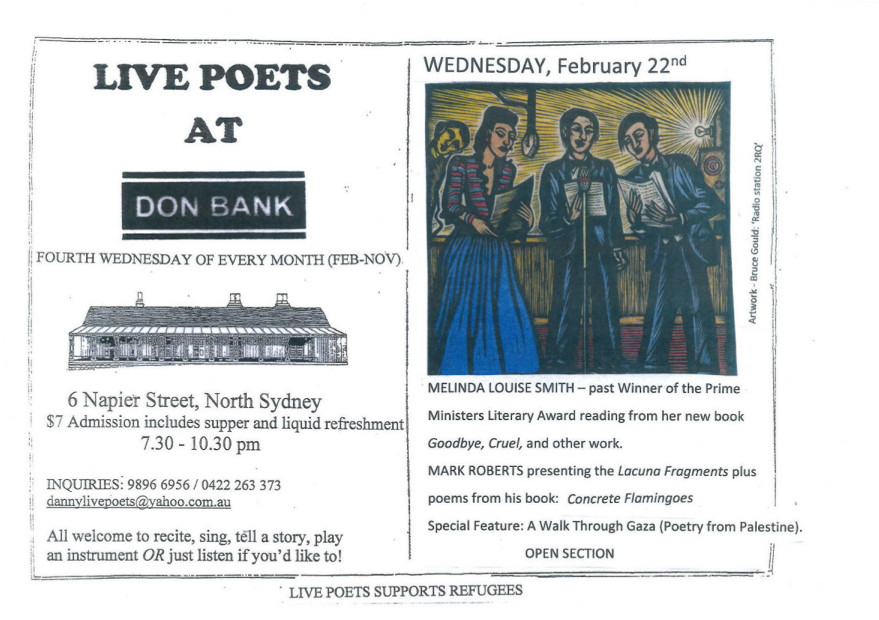
Mark Roberts, Melinda Louise Smith and A Walk Through Gaza (Poetry From Palestine) At Don Banks North Sydney

19 Feb

don-banks

I’m looking forward to reading with Melinda Louise Smith and listening to A Walk through Gaza (Poetry from Palestine) this coming Wednesday night at the Don Banks Museum, 6 Napier Street North Sydney from 7.30 pm. I will be reading poems from my new manuscript Lacuna as well as some from my last collection Concrete Flamingos. Many thanks to Danny Gardner for inviting me.


‘Forgetting is So Long’ – Love Poetry by Australian Men

14 Oct

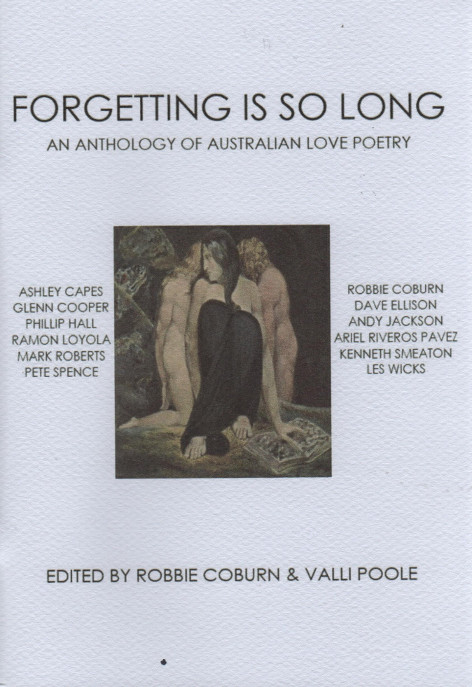
Forgetting is so Long: An Anthology of Australian Love Poetry edited by Robbie Coburn & Valli Poole. Blank Rune Press 2016


Love is so short, forgetting is so long.
………………………… – Pablo Neruda

forgetting-is-so-long-2

.

When we think of anthologies were generally think of larger books with lots of pages so it was exciting to be asked to contribute to a chapbook anthology of Australian love poems. Some years ago I had some poems in the Inkerman & Blunt Australian Love Poetry anthology. That was a huge, diverse and ultimately uneven anthology (as anthologies of that size tend to be). Forgetting is so Long is the opposite – it is a small, beautifully constructed chapbook and it features love poems by men. When I was submitted my poems to Robbie Coburn I was unaware that the anthology would be purely love poems by men but I have been pleasantly surprised by the result and the company in which my two poems have landed. There is a hint here of a different masculinity, something that deserves to be explored in greater depth.

Along with my work Forgetting is so Long contains poetry by Ashley Capes, Robbie Coburn, Glenn Cooper, Phillip Hall, Ramon Loyola, Pete Spence, David Ellison, Andy Jackson, Ariel Riveros Pavez, Kenneth Smeaton and Les Wicks. It is available from Collected Works Bookshop in Melbourne or you can contact the publisher for details on how to acquire a copy blankrunepress@gmail.com

.

.

‘perfume’ wins 2016 Dangerously Poetic Byron Writers Festival Poetry Prize

14 Aug
With Anthony Lawrence (left) at the Dangerously Poetic Byron Writers Festival Poetry Prize presentation. Photograph Linda Adair

With Anthony Lawrence (left) at the Dangerously Poetic Byron Writers Festival Poetry Prize presentation. Photograph Linda Adair

Last weekend I had the wonderful experience of attending the three day Byron Bay Writers Festival and, on Saturday night, being awarded the 2016 Dangerously Poetic Byron Writers Festival Poetry Prize for my poem ‘perfume’. In his judge’s report for the prize Anthony Lawrence described ‘perfume’ as:

‘perfume’ moves like frames in a sepia-tone, grainy film. Its story suggests intrigue, death, rural myth or local history, in a time of war.

First and third person points of view combine in clipped, lyrical stanzas to create a miniature novel in which mystery and allusiveness are palpable.


Details of the award, together with the winning poems can be found here http://dangerouslypoetic.com/2016/08/and-the-winners-are-2/ or you can find ‘perfume’ below.


perfume
………………………………………………….she heard him
………………………………………………….an instant before
………………………………………………….the scarf pulled tight
………………………………………………….against her throat
the train to lithgow
settles into a metal song
reassurance of steel on steel
………………………………………………….her arm swung around smashing
………………………………………………….the perfume bottle to the floor
last night I smelt a ghost
sweet & alluring
flowers, orange
a suggestion of earthiness
………………………………………………….wartime
………………………………………………….he will be shipped out
………………………………………………….before
………………………………………………….they find the body
a ripple of iciness
flowing up the bed
my eyes closed
but awake
colder now
than a bathurst winter
………………………………………………….left behind in the pub
………………………………………………….next to the station
………………………………………………….waiting

.

.

.

‘The Tiger in the Head’ by Robin Gurr (1990)

9 Jun

The Tiger in the Head by Robin Gurr. Jacaranda Wiley 1987. First published in SCARP No 16. May 1990

The title of Robin Gurr’s sixth collection of poetry, The Tiger in the Head, is echoed in her poem ‘The Visionary at Dawn’:

Inside the cherished

chaparral of his skull

.

nestles a stealthy drowsing

tiger

While the poem has, as its departure point, Rousseau’s painting ‘The Sleeping Gypsy’, there are also very deliberate and unmistakable echoes of William Blake. The most obvious refer­ence to Blake is the image of the Tiger. Compare, for example,

a tiger

stalks in emancipated bliss

 .

flashing poems from its sulphurous eye

with

In what distant deeps or skies

Burnt the fire of thine eyes

                                                                 (Blake)

or

Inside the harsh

Saharas of his skull

,

a tiger

rasps into its pondered mash

(Gurr)

with

What the hammer? What the chain?

In what furnace was thy brain?

                                                     (Blake)

Gurr’s concentration on light and dark, day and night in the opening poems of the collection also recalls Blake. This dichot­omy recalls the Songs of Inno­cence and Experience and, indeed as we progress through The Tiger in the Head, we come across poems with titles like ‘Child in nature’ and ‘Three meetings: Dark, Fear and Death.

For Gurr a celebration of youthful life and naivety is fol­lowed by the realisation of death in the same way as night follows day:

The sea mouths the morning

Then spits it on the shore

The stippled shells hold warnings

that night will come once more

                                                                ‘Shells’

In these poems Gurr moves from the very strict rhythms and rhymes of a poem like ‘Shells’ to the apparent freedom of ‘The Visionary at Dawn’. Her best poems however, are those she keeps under a tight rein. The Plath like ‘The Cutting of the Wind’, with its carefully meas­ured lines which have the effect of emphasising each word, is an example of Gurr at her best:

My face is turned by blade

my mortared limbs were

.

cast in clay  earth locked

and burnt to strength

While the highly structured nature of Gurr’s poetry at first seems a little ‘old fashioned’ when compared with the current directions of contemporary po­etry, her obvious skill at utilising traditional forms quickly over­comes any reticence in her read­ers. She doesn’t allow the struc­ture of the poem to dictate to her, rather she uses it to mould her ideas, constantly surprising the reader with unconventional rhythms and sound patterns. Indeed Gurr’s poetry repays a careful reading.

The Tiger in the Head i s a very accomplished collection by a poet who is obviously in complete control of her genre. While the book has been handsomely pro­duced by Jacaranda Press my only complaint is that there is no listing of her five previous collec­tions. This is going to make track­ing her earlier work down diffi­cult for those many readers who may want to read more of Gurr’s work.

– Mark Roberts

God and Landscapes: Andrew Lansdown: Between Glances & Rhyll McMaster: On My Empty Feet

20 Mar

Between Glances by Andrew Lansdown, William Heinemann Australia 1993 and On My Empty Feet by Rhyll McMaster, William Heinemann Australia. First published in Overland 135, Winter 1994.


There is a simple delicacy to many of the poems in Andrew Lansdown’s sixth col­lection of poetry, Between Glances. Lans­down moves slowly through the landscape bringing a spiritual intensity to bear on the objects of everyday life. Many of his best poems grow out of a single image. In ‘Tea Chest’, for example, a robin drinking water out of a dis­carded tea chest is captured in the centre of the poem:

The late afternoon light

duplicates the bird’s shape darkly

.

in the still water as it stoops

to drink.

The poem is, in fact, almost a fable. Lansdown is suggesting that nature can transform a func­tional object which is perceived to have outlived its usefulness to an object of beauty and of a different functionality:

Truly, this moment, that tea chest

bears a cargo more precious than any

.

it carried long ago from India or Ceylon.

The title poem of the collection, ‘Between Glances’, operates on a similar level. The poet has been watching a single autumn leaf on a liquidambar tree all day:

I glance

down at my work then out

.

again, only to find it gone.

Gone between glances. If only

I had known that last wave

was a goodbye, a farewell,

.

I would not have looked away.

While the transient nature of beauty obviously lies at the heart of this poem, ‘Between Glances’ can also be read as a fable where the falling leaf represents human mortality. Above all else Lansdown is a religious poet and, in the context of the rest of the collection, these ‘fables’ take on a distinct spiritual dimension.

Between Glances contains a number of more obviously religious poems. There is an uneven-ness to these poems which I feel is probably almost inevitable. Religious poetry is difficult to write and like many poets Lansdown does occa­sionally fall into cliche. However, Between Glances contains some of the best religious poetry I have read for some time.

For most of the collection Lansdown is content to write about his children and the natural land­scape, but in the last section there are a number of poems which grew out of a trip to Sydney. These poems lack some of the spiritual intensity which runs through the rest of the book, but I feel that they actually balance the more overtly religious nature poems.

After the softness of Lansdown’s poetry Rhyll McMaster’s third collection, On My Empty Feet, seems positively hard-edged. In the opening poem, ‘Figure in the Landscape’, we have a view of the landscape very different from Lansdown’s images of transient beauty:

Sheep lie down in the wind,

trees tremble their roots

in underground runnels.

Cattle pour milkily across

a world of occurrence.

Whereas Lansdown was content to sit back and watch the robin drink out of the old tea chest, McMaster places herself very firmly in the poem:

I am the figure in the landscape

which does not live

unless I move.

On My Empty Feet is divided into three sec­tions. The tone of the first section is set by ‘Figure in the Landscape’, which is one of the strongest poems in the collection. Many of the poems in this section explore the relationship of  the poet to both her external physical environment and her internal mental state.

The second section revolves around a sequence of poems called ‘My Mother and I Become Victims of a Stroke’. In ‘Residues’ McMaster records the way her mother was affected by a stroke:

Her brain is stripped

to its inessentials.

She’s disposed of the gears.

Her mind is full of old shoes

.

that don’t fit.

In ‘The Mirror’, the mother’s illness forces the daughter to confront their relationship:

I look into the mirror of my life

and see my mother

.

She glares back at me

warningly.

She says, “I’m bitterly disappointed.”

In the final section McMaster recalls her childhood, effectively going back to a time before her mother’s stroke. Balancing the pain in the poems in the second section, the poems here are nostalgic and safe, as in ‘Our Street’:

There I am, aged six, striking home from

school.

I stop to gloat at the crack that grows the

ferns.

At silent number eight the privet hedge

rampages down the side.

On My Empty Feet is a powerful collection. Its strength lies not only in the individual poems but also in the careful way the collection is structured. My one complaint with McMaster is the length of time between collections. Let’s hope we don’t have to wait another seven years for her fourth.

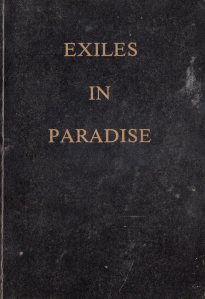
Two Anthologies: EDGE CITY ON TWO DIFFERENT PLANS Inversions 1983 & NETWORK/EXILES IN PARADISE Fringe Network 1983

29 Feb

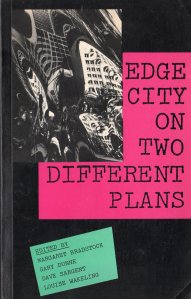
Two Anthologies: EDGE CITY ON TWO DIFFERENT PLANS, edited by Margaret Bradstock, Gary Dunne, Dave Sargent and Louise Wakeling, Inversions 1983 &   NETWORK/EXILES IN PARADISE   Fringe Network 1983. Published in P76 Issue 2 1984.

In a recent interview (Image Vol.6 No.3), John Tranter talks of the progression of contemporary Australian poetry in terms of a “pendulum swing reaction” against what is seen as the ‘accepted’ or ‘established’ mode of expression. Such a comment, of course, refers back to the “generation of ’68” and the break that many writers felt they were making from the established, conservative forms of writing which had predominated during the fifties and sixties, but it also implies a conservative backlash which, Tranter suggests, will “swing” the writing scene back to something resembling the pre-’68 situation. On a similar note, Kris Hemensley, reviewing Ania Walwicz, Dimitris Tsaloumas and Mary Fallon (Syllable No.1), talks of the “rut” in which contemporary Australian writing “had become stuck” by the beginning of the eighties. One possible explanation for this is that the writers who saw themselves as the poetic revolutionaries of 1968 now feel quite comfortable with the way Australian writing has developed during the seventies and no longer feel it necessary to question or challenge the prevailing mood of the literary establishment.

There are, however, many writers who aren’t satisfied with the ideology which underlies much contemporary Australian writing. The strength of Women’s Writing at the moment (as witnessed by the, No Regrets anthologies, Frictions, the large number of Women’s Writing Groups and the Faceless Woman Readings in Melbourne) can be seen, in part, as a reaction against the subtle, and often not so subtle, repression of women writers throughout Australia’s history, and which is still prevalent in the post ’68 writing scene.

Two recent anthologies, Edge City on Two Different Plans (a collection of Lesbian and Gay writing from Australia) and Network/ Exiles in Paradise (An anthology of new writing from the Melbourne Fringe Arts Festival 1983), highlight further problems with the Tranter pendulum. Both anthologies can be seen as jerking Australian writing, out of its rut, though in quite different ways. Edge City confronts the masculine tone inherent in much Australian writing which was left virtually untouched, and in some cases actually strengthened, by the “generation of ’68”, while Network/Exiles in Paradisehas combined an ‘open access anthology’, a fringe arts festival and collective production so that the writers become responsible for, and learn the skills necessary to compile and produce the anthology.

In other ways Edge City and Network/Exiles in Paradise are very-different anthologies. The editors of Edge City, in a lively forward, discuss the history of the anthology and attempt to place it in an historical context. They make it clear, for example, that they are in debt to the women’s writing movement:

“We also thought, like the editors of earlier anthol­ogies of women’s writing which explored areas of specifically female experience, that it was necessary to counterbalance the heterosexist and masculinist literature which still predominates in Australian culture.”

But they point out that the aim of the anthology was not to set up an ideological framework but to present us with “an important expression of the diversity of the lives….. of homosexual women and men.” Over-all, the Introduction and Forward compliments the work of the 43 writers in the anthology and it seems that Dennis Altman is correct when he claims that Edge City’s importance lies not only in the creative work it contains, but equally “as the foundations for what is the long overdue emergence of a literary voice of lesbian and gay men in Australia.”

Edge City attempts to highlight what it sees as the diversity of lesbian and gay writing by collecting work by 43 different writers (25 men and 18 women), ranging from fairly traditional short stories and poetry, to more experimental prose and poetry and a number of song lyrics. Although there are a few well known names among the 43 contributors, one of the most refreshing aspects of the anthology is the amount of interesting and exciting work by writers who have had little or nothing published in the mainstream literary magazines.

A number of prose pieces deal directly with aspects of a lesbian lifestyle. Jane Eliot’s ‘Holiday at the Parm’, for example, examines a woman’s reaction when she returns to the country town where she grew up. Her friends are married and living conservative country lives, while she has returned from the city a feminist and a lesbian. Eliot effectively combines a slight feeling of nostalgia with the underlying political conflict which affects the way the woman reacts to people in her past. Geraldine Mecredy’s piece ‘Journey’, like ‘Holiday at the Farm’, uses a central theme of a woman analysing her past. She has recently ended a heterosexual relationship and she reflects upon aspects of it – how it started, conflicts, sexuality and so on. Runn­ing throughout the pieces are the fragments of a dream, of being in s waiting room waiting for a train. The heterosexual relationship becomes the world outside the waiting room, the train a method of escape and a means of personal transformation.

The songs tend to be more obviously political than either the poetry or prose. Phillip Stevenson’s ‘Thank you Lord for Gay Liber­ation’  (which has been performed widely around Sydney by the Gay Liberation Quire) satirizes the church’s approach to homosexuality while, at the same time, asserting the strength of the gay movement.  Alison Lyssa’s songs also approach important issues with humour. ‘There are lights sweeping over the city’, for example, sees the nuclear threat as a part of patriarchal society:

“My brain can’t believe how they got there

‘Those billions of dollars of toys;

Do they fire them in circles like marbles

To keep up with the rest of the boys?”

Other pieces which I felt stood out were the poems of Margaret Bradstock, Mary Fallon, Tony Page and Elaine Byrant. Gary Dunne’s story ‘The Tyranny of Distance’ and Nicholas Thomas’ prose piece ‘Contradictions and Peripheries’ and Judy Small’s song ‘The Festival of light’,

The importance of Edge City is that it has focused attention on lesbian and gay writing in Australia and has been responsible for stimulating quite a lively discussion. On a purely literary level, Edge City introduces a number of exciting writers whose work may have never been accepted by the mainstream literary scene but who, it is hoped, now have the confidence to continue writing without having to compromise in an effort to be published.

Compared with Edge city, Network/Exiles in Paradise appears quite uneven. Among some exciting pieces of writing there are some almost total failures. Network/Exiles in Paradise lacks a unifying theme and is without Edge City’s encompassing introduction. Network/ Exiles in Paradise is, in fact, two different anthologies, separated not by theme, but in the way each was produced. We are told simply “the editing, compilation and lay out of ‘Exiles in Paradise’ was performed by the writers themselves;.  ‘Network’ drew on writers within the book and Fringe Network for its production.” So Network/Exiles in Paradise has taken the idea of an open access anthology a step further to collective production. One of the stated aims of the anthology is to “encourage writers to be responsible for their work beyond its actual creation.”

Overall I found the poetry, with the exception of Cliff Smyth, Pete Spense and John Anderson, quite disappointing. Daniel Keene’s piece, ‘Echoes of Ruby Dark’, was for a while interesting, but because of its length, rapidly lost much of its impact. I found the length of many of the poems irritating. It is extremely difficult to maintain a poem through four hundred or so lines, and unfortunately I don’t believe any of the poets who attempt such a task in Network/Exiles in Paradise quite succeed.

On the other hand, prose is definitely Network/Exiles in Paradise’s strength. Ania Walwicz’s work is already fairly well known and her four prose pieces highlight the conservative approach some of the other contributors adopt towards the language. Raphael Pomian’s prose has, at times, a feeling similar to Walwicz’s. Both use uncluttered language but manage to create an overall richness. For Walwicz it’s predominately sound patterns and rhythms, while Pomian’s prose is extremely descriptive, at times almost to the point of being languid. Moya Costello’s ‘The Usherette’ is a realistic portrayal of working as an usherette at a concert hall. Periods of boredom, flustered activities and flights of fantasies are undercut by a sarcastic humour directed mainly at the patrons who she directs to their seats. Berni Jassen’s untitled prose piece, which is the account of the beginning of a relationship, is perhaps, the most powerful in the anthology. Her skilful use of short sentences and clear language gives an intensity and urgency to her theme.

The contrasts in Network/Exiles in Paradise are, in themselves, quite illuminating. The successful pieces tend to be fairly short,or at least concise and uncluttered, while some of the longer poems and stories I found extremely difficult to get through, Fringe Network apparently intends to publish more anthologies and “self-devised books by groups of writers”, the results promise to be interesting.

I found little evidence in Edge City and Network/Exiles in Paradise to suggest a movement towards a more conservative writing in Australia. Tranter’s pendulum is, of course, a gross over simplific­ation. Seeing writing as a movement back and forth between two points is extremely limiting and excludes the possibility of development in other directions. It suggests a ‘establishment’ view of literature operating ‘like clockwork’ to predetermined rules. Projects like Edge City and Network/Exiles in Paradise disrupt the equilibrium by quest­ioning the dominant ideology of Australian literature and suggest new directions in which it could move.

EDGE CITY ON TWO DIFFERENT PLANS inversions (Sydney Gay Writers Collective) P.O. Box 158 Leichhardt N.S.W. 2040. NETWORK/EXILES IN PARADISE Fringe Network 201 Brunswick Street Pitzroy Victoria 3065

– Mark Roberts

Towards a New Diversity: Martin Johnston and the New Australian Poetry

25 Feb

Towards a New Diversity: Martin Johnston and the New Australian Poetry. By Mark Roberts. Published in Island 58, Autumn 1994.

Shortly before I received my copy of John Tranter’s latest collection, At the Florida, Mick Jagger turned fifty. Television marked the occasion with old Rolling Stones film clips and numerous minor musical celebrities emerged to describe how Jagger had influenced their own musical careers. Later, while glancing through Tranter’s biographical data, I realised that he too was celebrating his fiftieth birthday in 1993. So where were the “minor” Australian poets lining up to explain Tranter’s influence on their work, where was the TV news item, the magazine articles. I had in mind one of those celebratory volumes the English are so good at: A Collection of Poems dedicated to John Tranter on the Occasion of his Fiftieth Birthday.

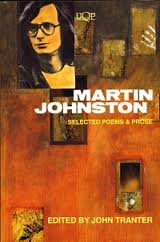
There is a certain symmetry here. Not only does 1993 mark Tranter’s fiftieth birthday, it also represents twenty-five years since 1968—a year that Tranter helped make a milestone in the development of contemporary Australian poetry. These factors, together with the publication of Tranter’s ninth collection of poetry and the Tranter-edited Martin Johnston: Selected Poetry and Prose, provide us with the opportunity to look back and perhaps begin a reappraisal of the new Australian poetry as it begins to take its place in Australia’s cultural history.

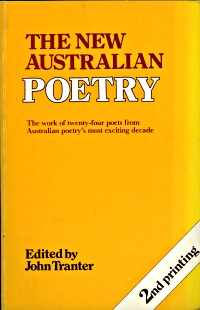
The starting point for any study of contemporary Australian poetry over the last twenty-five years is the Tranter-edited anthology The New Australian Poetry (NAP) (Makar Press) in 1979. Tranter was not, of course, the first to recognise the major changes taking place in Australian poetry during the late ’60s and early ’70s. The label “New Poetry”, in its Australian context, probably owes much to the takeover in 1969 of the established Poetry Magazine by a group of young poets including Robert Adamson and Martin Johnston. Renamed New Poetry, its success over the next decade signalled the movement of the poets associated with the magazine into the literary mainstream. Five years later the term “New Australian Poetry” was also used by Kris Hemensley and Robert Kenny in the introduction to an anthology called Applestealers, edited by Robert Kenny and Colin Talbot (Outback Press 1974).

In many respects Applestealers is as important an anthology as The New Australian Poetry. Although the two anthologies share many of the same poets, they are very different. The most important difference, I believe, lies in the five years that separated their publication. In 1974 there was an immediacy to the essays that Kris Hemensley and Robert Kenny contributed; they are a call to arms, a rallying cry against the “abdication of poets from poetry to careerism”(Kris Hemensley ‘The Beginnings—A note on La Mama’ Applestealers page 9). Whereas, by 1979, Tranter was looking back and documenting the movement. Although many of the poets were still writing, one senses in the introduction to The New Australian Poetry that Tranter was attempting to confirm the New Australian poetry’s place in Australia’s cultural history.

It is ironic then, given that in his introduction Tranter identifies that one of the features of the new Australian poetry was its “freedom from the handcuffs of rhyme and the critical strictures of English departments”, that one of the great successes of The New Australian Poetry was the influence it had upon the teaching of Australian poetry in university and college English departments. This influence, I believe, was not unintentional. In his introduction to the anthology, and in a paper he gave to ‘The American Model Conference’ held at Macquarie University on 19791, Tranter carefully argued the importance of his “generation” and forcefully outlined the social, political and cultural factors which he believed helped propel a group of young poets to make a radical break with Australian poetic tradition.

In this respect, then, Tranter’s anthology marks the end of the main period of dynamism of those poets he grouped together as the “Generation of ’68”. By 1979 many of the poets in The New Australian Poetry had become part of the poetry establishment—or rather they had created their own establishment. New Poetry magazine had become one of the most influential poetry magazines in the country and small presses like Island Press, Makar Press, Outback Press and Rigmarole of the Hours (among many others) had produced an extraordinary number of impressive titles.

By the early ’80s, however, things had begun to change. The Australia Council’ and, in particular, The Literature Board were beginning to feel the effect of Fraser’s razor gangs and an economic recession made it even more difficult for poets to produce collections or for small presses to publish them. New Poetry magazine faltered, then folded, but by then many of the poets it had earlier championed were being published regularly in the mainstream literary journals. Given such a context, many poets would have been more than happy to look upon Tranter’s Generation of ’68 as a sort of lost golden age of contemporary, experimental/radical poetry.

So then, who composed the Generation of 68? The easiest answer is those poets Tranter included in his anthology. But, as with every anthology, questions immediately arise as to why particular poets were left out. It is probably safest to look to Tranter’s own explanation. Tranter lists a number of factors which helped shape the generation: the baby-boomers of the postwar years who came of age in the late ’60s, advances in printing technology which made it cheaper and easier to publish magazines and books, and, that adjunct to imagination, drugs. But the most important influence was the new poetry of the USA which emerged in the late ’50s and early ’60s. While these factors may effectively include all the poets within The New Australian Poetry, it does remain a somewhat limiting definition if we are to attempt to understand the developments which took place in Australian poetry during the ’80s.

Perhaps a better starting point is to identify those poets who were excluded from Tranter’s anthology. As Livio Dobrez has pointed out, it must be remembered that The New Australian Poetry “represents, after all, Tranter’s taste, his interpretation of the nature of the New Poetry, and one may well query the centrality of this”2. Of course the near absence of women in The New Australian Poetry has been a point of discussion ever since its publication. In fact both The New Australian Poetry and Applestealers each contain the work of only two women writers. Writers who I would have thought fitted Tranter’s description of a Generation of ’68 poet, such as Jennifer Rankin, Dorothy Porter, JS Harry, Pam Brown, Lee Cataldi and Kate Jennings, aren’t even mentioned.

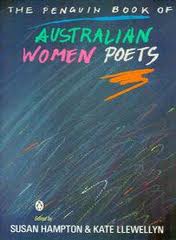
The Generation of ’68 has come to dominate discussion of Australian poetry over the last twenty-five years. But while the movement Tranter effectively analyses did make a profound break with tradition there were other poets who were also smashing their way through Australia’s poetic orthodoxy. Kate Jennings’ 1975 anthology Mother I’m Rooted had an enormous effect on Australian poetry in general and on Australian women poets in particular. Nine years later Susan Hampton and Kate Llewellyn, in their introduction to The Penguin Book of Australian Women Poets (1984), looked back over “fifteen well-known collections of Australian poetry since 1970” and found that on average women poets made up only seventeen percent of total contributors. They went on to claim “this may not be a problem of deliberate critical neglect, but a problem of consciousness—until recently most anthology editors, literary historians and critics have been male, and their gaze was unconsciously focused on other men”. Hampton and Llewellyn’s anthology sparked a debate which ran for years in the book pages of the weekend papers and the review pages of literary journals as anthologists attempted to justify the ratio of female to male poets, and conservative male writers pulled out their old rusty quality/excellence shield and attempted to take shelter behind it.

But if the Generation of ’68 broke with a British-based poetic tradition, the women’s writing movement of the ’70s swept away traditional notions of poetic excellence. The sales figures for both Mother I’m Rooted and The Penguin Book of Australian Women Poets suggest that both anthologies gained a readership far beyond the traditional poetry-buying public. In a review of Hampton and Llewellyn’s anthology, first published in The Sydney Morning Herald 13 September 1986, Martin Johnston, one of the “chosen” referred back to the critical reaction which greeted Kate Jennings’ anthology: “It sold a lot of copies and caused a lot of consternation, notably among (male) reviewers who thought it had something to do with bra-burning and were incapable of seeing that their own notions of ‘quality’ were—as Jennings had argued all along—socially constructed, not delivered from on high.”

Rather than view the Generation of ’68 as a coherent movement, it is, perhaps, more useful to see it as part of a larger cultural movement. Such a stance would acknowledge that, while the influence of American poetry and the political upheavals of the ’60s gave an impetus to a group of young, predominantly male, poets to break from what was seen as an Australian poetic tradition, there also existed a more traditional poetry as represented by poets such as Les Murray and Geoffrey Lehmann. At the same time the ’60s was also the period that the women’s movement was reborn and it was only natural that women writers would quickly gain the self-confidence to broaden our notions of poetry even further. One could, at this point, also look at the development of gay and lesbian poetry during the mid-to-late ’70s which culminated in another influential anthology, Edge City on Two Different Plans, or the rapid growth of Aboriginal writing during the ’80s.

Tranter himself seemed to be arguing something similar in the introduction to The Penguin Book of Modern Australian Poetry (1991) which he edited with Philip Mead. More ambitious than The New Australian Poetry, this anthology attempts to define “what is the ‘modern period'” and what poetry has been important to its development. In their introduction Tranter and Mead are, in effect, placing the Generation of ’68 writers in the sort of wider context which I have just outlined: “But our readings of the past keep changing. It seemed to us that modern Australian poetry needed to be looked at from a perspective that took in not only the issues of the ’60s, but those of the ’40s and the ’80s (and now the ’90s) as well”. Tranter and Mead go on to claim that “if the modern movement has a major theme, it must be the constant questioning of older ways of looking at things”. While such a definition can, of course, be applied to the writers in The New Australian Poetry it can equally be applied to Hampton and Llewellyn’s attack on the marginalisation of women poets or Kevin Gilbert’s reaffirmation of the strength of Aboriginal poetry in the face of two centuries of white cultural genocide.

It was important that Tranter and Mead acknowledged the important role that women poets played in the development of contemporary Australian poetry. Even more satisfying is the strength of this acknowledgment:

The roles of gender, race and ethnicity are crucial in any act of reading. While this (collection) doesn’t claim to be a feminist or a multicultural anthology, the selection from recent women’s and multicultural poetic writing has a strategic place in our understanding of modernity in Australian poetry… Poetry by women… has claimed a powerful role in postmodern developments in Australia over the last two decades.

Mead and Tranter seem to be moving towards a view of contemporary Australian poetry which is more inclusive than Tranter’s New Australian Poetry, and they have indeed thrown a much larger net than Tranter did back in 1979. Their catch includes many of the poets who appeared in the Hampton/Llewellyn anthology and Kevin Gilbert’s Inside Black Australia (Penguin 1988). Interestingly it also includes poets such as Les Murray, Robert Gray and Geoffrey Lehmann who have commonly been regarded as the natural antithesis to the Generation of’68 poets.

While the anthology has embraced the women’s writing movement and the diversity of multicultural and Aboriginal writing, there are, no doubt, those who can argue that The Penguin Book of Modern Australian Poetry excludes their poetry. On one level The Penguin Book of Modern Australian Poetry is refreshing because it appears to be retreating from the confrontationist approach which has marked poetry criticism in Australia for many years. On a closer reading, however, the anthology can be seen to be building on the foundation of The New Australian Poetry. Tranter’s Generation poets emerge as central to the editor’s concept of “Modern Australian Poetry”. While the collection begins with Slessor, one is left with a feeling of the centrality of poets such as Tranter, Adamson, Johnston, Dransfield, Forbes and Duggan. These are, according to the anthology, the real groundbreakers, the poets who dragged Australian poetry into the modern world. They helped to created a climate in which women’s writing, and writing by non-Aiglo-Celtic poets could be critically accepted. The inclusion of poets such as Murray and Lehmann in such a context serves to place them in a hierarchy of modern Australian poetry where they can perhaps see the peak but have little hope of scaling it.

The futility of an approach which seeks to categorise poets, or to claim them for a particular movement, is clearly illustrated by the publication of Martin Johnston: Selected Poems and Prose, a posthumous collection edited by John Tranter. One of the strengths of the collection is that it brings together Johnston’s critical writing, journal entries and interviews, as well as his poetry, so that we begin to have some sense of the complexity of this remarkable writer.

Introducing the writer and the work, Tranter refers to the unique place Johnston held among the poets of his generation, for while he was very clearly identified with the Generation of ’68 poets he did not fit easily into the new poetry pigeon hole. The son of authors George Johnston and Charmian Cliff, Martin had a childhood which was anything but conventional. He spent the first seven years of his life in England where his parents were working as journalists. They then moved to the Greek island of Hydra where George and Charmian attempted to make a living as fulltime writers. Following the success of the George’s autobiographical novel My Brother Jack the family moved back to Australia when Martin was seventeen. In many ways Australia remained a foreign country to him and he maintained a strong interest in Greek culture and politics for the rest of his life.

The Greek influence on his work at once placed him outside the mainstream of the new Australian poetry, which looked towards the USA for its poetic models. Tranter highlights lines from ‘Gradus Ad Pamassum’ in his introduction: “And the groovier modern Americans? They seem to be the context I’m supposed to work in, though I mostly haven’t read them.”

In an unpublished essay on John Berryman’s elegies Johnston directly comments upon the Australian poetry scene when he talks about the way Australian poets approach elegising other Australian poets: “Australian poets, in their relations with each other, either snipe or huddle: and neither attitude is a convenient one from which to undertake genuinely to memorialise the target.” A little later on he refers directiy to the influence of modern American poetry on Australian poetry:

how pitiful, how second hand, how weedy all our sub-O’Hara, sub-Ashbery, sub-Creeley and sub-Ginsberg; how ill fitting the borrowed clothes; how sadly comical the attempt to set up our rag-and-twig lay figures against the overwhelming weight of this century’s dominant body of English language verse.

Johnston’s solution is not to ignore contemporary American poetry, which is precisely what some more conservative Australian poets did, rather it is “to set out to discover just what is being done, rather than pursuing our general custom of imitating the most facilely imitable… aspects of our models”.

More than anything else, what emerges from this collection is a sense of Johnston’s erudition. He was, arguably, the most widely read poet of his generation and his work clearly shows the influence of European, and especially Greek writers as well as the more common Americans. Johnston was also a critic of some standing and he obviously brought to his own work the same critical intensity which he used on others. At the beginning of his essay on John Berryman’s ‘Elegies’, for example, he writes: “When an Australian poet dies there is, invariably, an almost instant exudation of rich—not to say overripe— elegiac verse from large numbers of his colleagues. The process is, it would seem, purely reflexive and quite, quite unstoppable”. In a poem from his 1978 collection The Sea-Cucumber, Johnston returns to a similar theme:

Death and rebirth myths are made by poets, and no wonder:

one Dransfield can feed dozens of us for a month,

a Webb for years. And they’re fair game, we can plead continuance,

no poet ever died a poet: as the salt filled Shelley

the empyrean gave way to the nibbling fish and the cold.

(In Memoriam’)

‘In Memoriam’, which is dedicated to John Forbes, illustrates the range of Johnston’s technique. He is, for example, quite at home with a playfulness which is influenced, if not by the Americans, then at least by the work of the other “new poets” around him:

O’Hara, Berryman, Seferis, Pound

have a lot in common. Not only are they all dead poets

but they make up a metrically perfect line

Johnston’s reputation as a major poet will rely I believe, to a large extent, on his longer poems, such as ‘The Blood Aquarium’, ‘Microclimatology’ and ‘To The Innate Island’. This last poem, although perhaps one of Johnston’s most difficult, is also one of his most rewarding. Johnston almost assaults the reader with details of Greek history and geography, relenting at the last moment by providing incredibly detailed notes which help to place the poem into context. For example the lines:

The island in the lake

scatters itself just below the surface in sherds and ash,

the trout feed on seventeen dear dead ladies.

take on meaning when we read Johnston’s notes: “Kyria Frossyni and her sixteen attendant ladies, drowned in the lake in 1801, for erotico-political reasons, by the then tyrant of Epirus, Byron’s good mate Ali Pasha. Ballads about this are still sung (and postcards sold).” A poem such as this is obviously far removed from the influence of the “groovier modern Americans”.

Martin Johnston: Selected Poems and Prose can only enhance Johnston’s already considerable reputation and emphasise the fact that Johnston’s early death was a tragic loss to Australian poetry. What emerges from a review of Johnston’s work, however, is not an overriding sense of his role as a part of the Generation of ’68. Rather I was left feeling the inadequacies that result from attempting to understand contemporary poetry through a study of different movements or groups. The closer we examine individual poets the more blurred the boundaries and definitions become. As Johnston wrote:

Coloured inks will soak through the best bond paper

in a soft fuzz of amoebas, a sunset blur

of fruit-coloured clouds, a weak ambiguous vision.

(In Memoriam’)

*****************************************************************************

Mark Roberts is a Sydney critic currently undertaking post graduate study at the University of NSW.

*****************************************************************************

NOTES

1    See John Tranter ‘Anaesthetics: Some Notes on the New Australian Poetry’ in Joan Kirkbv (ed) The American Model: Influence and Independence in Australian Poetry Hale and Iremonger 1982.

2    Livio Dobrez Parnassus Mad Ward: Michael Dransfield and the New Australian Poetry UQP 1990.

The Ultimate Commitment – Michael Dransfield: Collected Poems

22 Dec

Michael Dransfield Collected Poems Edited by Rodney Hall. University of Queensland Press 1987.  Southerly Volume 48. No 4. 1988.

When Michael Dransfiled died on Good Friday, 1973 at the age of 24 he had already published three collections of poetry and established a reputation as one of the most successful and popular of the new wave of young Australian poets who had emerged in the late 1960s. Since his death a further four collections have appeared, culminating in the Collected Poems (UQP 1987). When one considers Dransfield’s rapid rise to prominence, together with the attention focused on his lifestyle and the tragedy of his early death, it was almost inevitable that, to some extent, his life would come to overshadow his poetry. In fact, in the fifteen years since his death, the ‘Dransfield myth’, together with the decline in fashionably of the romanticism at the heart of much of his poetic imagery, has meant that his reputation as a poet has been attacked by a number of critics. In such a context, the publication in one volume of all of Dransfield’s published work, provides us with the opportunity to review his overall achievement and, hopefully, to reach a more realistic assessment of his work.

One cannot begin to examine Dransfield’s career, however, without noting the important role Rodney Hall has played over the last twenty years in bringing Dransfield’s work to the poetry reading public. It was Hall, then poetry editor of The Australian, who first ‘discovered’ Dransfield’ in 1967. It was Hall who passed Dransfield’s work onto Tom Shapcott who was then putting together an anthology of contemporary Australian poetry for Sun Books which would eventually become Australian Poetry Now.  Shapcott and Hall also helped Dransfield prepare his first two published collections, Streets of the Long Voyage (UQP 1970) and Inspector of Tides (UQP, 1972). While Hall encouraged Dransfield during his life, Dransfield’s death revealed the extent of Hall’s devotion to the younger poet. Hall took on the task of collecting all of Dransfield’s unpublished poems and prepared a selection for publication. The result were the two posthumous collections, Voyage into Solitude (UQP 1978) and The Second Month of Spring (UQP, 1980).

Hall has organised the Collected Poems so that the volumes in which the poems first appeared are mostly kept intact. As a result the poems appear in rough chronological order beginning with Streets of the Long Voyage (containing poems written between  1964 and 1969), The Inspector of  Tides (1968 to 1971), Drug Poems (1967 to 1971), Memoirs of a Velvet Urinal (poems from mid 1971), Voyage into Solitude (a posthumous collection of unpublished poems from 1967 to 1971) and The Second Month of Spring (poems from 1972). Not all these volumes, however, have been left intact. In the introduction Hall argues that where a poem has been published in more than one collection, he has chosen to leave it in the ‘large book’. As Hall believes that Drug Poems was an anthology of  “pieces addressing a particular subject”,  a number of poems that had previously appeared in Streets of the Long Voyage and Inspector of Tides,  and others that would later appear in Memoirs of a Velvet Urinal, have been left out of the Drug Poems section in the Collect Poems. While Hall’s argument for this exclusion is, of course, perfectly reasonable, it means that the overall effect of the Drug Poems section in the Collected Poems  is reduced.

Reading through the poems from streets of the Long Voyage  and The Inspector of  Tides I was once again struck by the balance Dransfield is able to find between the apparent simplicity of his individual images and the overall complexity of his most successful poems. This can be clearly seen in one of his best known poems, ‘Pas de deux for lovers’, which begins

Morning ought not

to be complex

The sun is a seed

cast at dawn into the long

furrow of history

A seed is, of course, a simple object. But it contains the potential to be something far more complex. So Dransfield’s morning sun becomes a planted seed and, as it sprouts, the day suddenly becomes far more complicated until we reach the final line:

…………Day

is so deep already with involvement

This overall richness of imagery, achieved by selective use of language and a careful juxtaposition of individual images, is one of Dransfield’s great strength in these first two books. One can recall numerous poems where he achieves it – ‘Chris’, “Surreptitious as Desdemona’, ‘Linear B’, ‘Death of Salvatore Quasimodo’, ‘Bum’s Rush’, ‘Ground Zero’, ‘Geography’, ‘Loft’ and ‘Inspector of Tides’ among others. While Dransfield, of course, was not the only one of his contemporaries to achieve this, the ease with which he achieved it again and again in these first two books, both of which were published before he was 22, is an indication of just how early he matured as a poet.

Dransfield was a self-declared romantic and the richness and delicacy of his imagery was an important part of his romanticism. The poems in his first two books are filled with what might be called clichéd romantic symbols – magic carpets, crystal wine glasses, Greek mythology, Vincent van Gough, ruined mansions , fallen aristocrats, candles and dukes. But Dransfield’s romanticism was not confined to his poetry. He increasingly attempted to live the romantic image of the ‘suffering’ artist cut off from mainstream society because of his/her sensitivity. This can, perhaps, be best seen in his drug poetry. Streets of the Long Voyage, The Inspector of Tides and Drug Poems contain some very powerful and moving drug poetry. ‘Bum’s Rush’, for example, is one of Dransfield’s best poems. But as his addiction deepened, drug related imagery began to dominate his poetry more and more.

In his earlier poetry drugs became a vehicle for his romanticism:

                                                 Becalmed now

on Coleridge’s painted sea in Rimbaud’s

drunken boat. High like de Quincey or Vasco

I set a course

for the Pillars of Hercules, meaning to sail

over the edge of the world

                                                          ‘Overdose’

Even death, if it was surrounded by drug imagery, took its place in Dransfield’s iconography of romanticism:

last week,  I think on Tuesday,

she died

just gave up breathing

toppled over

a big smashed doll

with the needle still in her arm

I made a funeral of leaves

and sang the Book of Questions

to her face as white as hailstones

to her eyes as closed as heaven

                                   ‘For Ann so still and dreamy’

Dransfield, in fact, clothed the life of the poet and the junkie in the same romantic imagery;

Once you have become a drug addict

you never want to be anything else

                                        ‘Fix’

to be a poet in Australia

is the ultimate commitment

                                    ‘Like this for years’

The inference here is clear, poets and junkies are really two sides of the same coin. This sense of the suffering individual artist/drug user, while clearly growing out of the milieu of the late 1960’s, has come, in time, to represent the less successful aspects of Dransfield’s romanticism.

On the acknowledgement page of the original Sun Books edition of Drug Poems, Dransfield states that a number of the poems “will appear in Memories of a Velvet Urinal to be published in the USA in 1972.” This was an overly optimistic note. According to Hall, Geoffrey Dutton had promised to take the manuscript with him to the US but, as it turned out, it was not accepted for publication.  Memories of a Velvet Urinal was, in fact, to remain in a number of different manuscript forms until Maximus Books in a Adelaide published a version in 1975.

Shortly before his death, Dransfield gave Hall one of the manuscripts of Memories of a Velvet Urinal which Hall then sent to a British publisher. As this was clearly a later version of the manuscript than the one eventually published by Maximus Books, Hall has used it in the Collected Poems. The differences between the two versions are quite important. Dransfield had actually discarded a number of poems which appeared in the Maximus edition – “madness systems parts one, two, three, four and the last”,  “Making it legal 1 &2”, “Flametree” and “To the great presidents” appear only as appendices to the Collected Poems. The situation is complicated by the appearance in the Collected Poems  of  another poem with the title “To the great presidents”. In the Maximus edition this poem appeared under the title

were                  no

           mar

no   more   war

Hall argues, and the evidence would appear to support him, that this actually represents a separate concrete poem and not a title. At this point I would have appreciated a further note of explanation from Hall concerning the transfer of the title “To the great presidents” from one poem to another.

The Collected Poems version also rearranges the order of the poems so that the book is now divided into four sections. This is, in fact, the most important change as it brings Memoirs of a Velvet Urinal into line with both Streets of the Long Voyage and The Inspector of Tides, both of which were divided into sections. The Maximus edition has the feeling of almost being thrown together. It begins with ‘Epitaph with two quotations’, a poem which is physically difficult to read and one of the weaker poems in the book. The Collected Poems  version, on the other hand, opens with the title poem, ‘Memoirs of a velvet urinal’, a striking poem about a homosexual encounter. Dransfield, by regrouping the collection, and rejecting a number of poems, has tightened the book considerably. Whereas it was quite easy to believe after reading the Maximus edition that all the poems had been written in the four-month period between May and August 1971 (which, in fact they had), the Collected Poems version has a much more crafted and professional feel to it.

There is also a tendency in Memoirs of a Velvet Urinal for Dransfield to move away from the heady romanticism of his earlier work. In a poem like ‘Play something Spanish’, lines like:

planes of light.  yes.  they were effective.  yes.  you

are lost in them,  their obvious coast

led you away to a place you cannot identify.  spain?

never.  play something metaphysical…..

suggest that contemporary American poetry was beginning to have a greater influence on his work. Unfortunately, there are also poem, such as ‘Poem started in a bus’, which depends upon a heavily clichéd, moralist ending:

                                                              …..Its easy

to forget violence while violence

forgets you

It’s difficult to escape the feeling that Dransfield  could still have done more to the manuscript of Memoirs of a Velvet Urinal. The evidence suggests that, in the face of a number of publishers’ rejections, this editorial process was well underway at the time of his death. If he had lived, Memoirs of a Velvet Urinal, in time, may have been shaped into a volume which surpassed the achievement of his first two books.

Voyage into Solitude is the first of two collections of unpublished work which Rodney Hall edited after Dransfield’s death. In this first collection Hall assembled his selection from the period 1967 to 1971. In effect this represents the material that Dransfield, and those who helped him, rejected when editing material for those books he did publish during his life.

Overall it is probably fair to say that Voyage into Solitude is a tribute to the editorial process which went into the first four books. There are only a few poems in this collection which I would have been prepared to argue for. These would include ‘Sonnet’, ‘The sun but not our children’ and the wonderfully descriptive ‘Pioneer Lane’. For the most part, however, it is easy to see why these poems were left out. Many seem incomplete, an image doesn’t work properly or, as is more common, is too clichéd to be effective. Though it was obviously important for Hall to collect and publish these “rejected” poems, in the context of the Collected Poems, Voyage into Solitude remains a book primarily for the Dransfield scholar or enthusiast.

While Dransfield seemed to be developing, almost organically, away from the lush romanticism of his earlier work in Memoirs of a Velvet Urinal, the poems in Hall’s second posthumous collection, The Second Month of Spring (UQP 1980), marks a dramatic change in both style and content. All the poems in this collection were written during the last year of Dransfield’s life. In April 1972 Dransfiield, while riding his motorcycle, was run off the road south of Sydney by an off-duty policeman. Besides some serious injuries to his head and leg, the pethadine he was given in hospital undid months of effort put into overcoming his addiction. As might be expected, the accident figures prominently in these last poems:

used   to get  through

three  five  six

books  a  day

now  can’t  read

much  more  than

one  short  poem

or  an  article

blame  it  on

medication

happens  to  all who  happen  here

it  was  the  same

in  darlo

months  ago

since  my  last

accident

april

in  fact

i  write

cannot  revise

they  also  serve

                                 ‘October elegy for Litt’

Dransfield stopped referring to his work as poems during this final period, preferring to call them raves. In effect the work in The Second Month of Spring can be likened to the final explosion of light a star gives off as it starts to collapse in upon itself. These last poems are, in fact, intensely personal, almost to the point of being a diary in verse.

As far as style goes they are poems cut back to the bare essentials:

even an

ugly joint

will get you high

as afghan

hills

                                ‘imports’

Word plays often become an end in themselves, and even his earlier work is not safe:

look ahead

straits of the long

voyeur

                          ‘cadlike’

While this is not great poetry, it is difficult not to be moved by the extremes of emotion – anger, hope, resignation – and, at times, the intense physical pain, which these poems highlight.

Rodney Hall, in his introduction to Voyage into Solitude, made the point that Dransfield is one of the few Australian poets to ever have “a genuine popular following….among people who do not otherwise read poetry”. The sheer size and scope of the Collected Poems, I believe, illustrates why Dransfield was able to build up this following.

Dransfield may have felt that being a poet in Australia was “the ultimate committment”, but there is no doubt that the late 60s were an exciting time to be a young poet in Australia.  While most of his contemporaries saw themselves as “modern” poets, breaking the hold of the conservatives on Australian poetry, Dransfield was reading the romantics as well as contemporary American and European poetry. Though critics may disapprove of  Dransfield’s romanticism, there is little doubt that, during the late 60s, it tapped a feeling among young people and, as a result, can be said to lie behind much of Dransfield’s initial popularity.

Perhaps, in the final instance, Dransfield’s greatest strength can be seen in the development we can trace in the Collected Poems from the early, richly romantic poems, through to the more hard-edged poems of Memoirs of a Velvet Urinal. Sadly, his tragic death in 1973 cut short this development. We should be grateful to Rodney Hall for editing this collection because, if nothing else, it has helped focus attention back towards the poems and away from the “Dransfield myth” which has come to dominate his reputation since his death.